
Pressure Washing Your Home: What It Helps and What It Harms

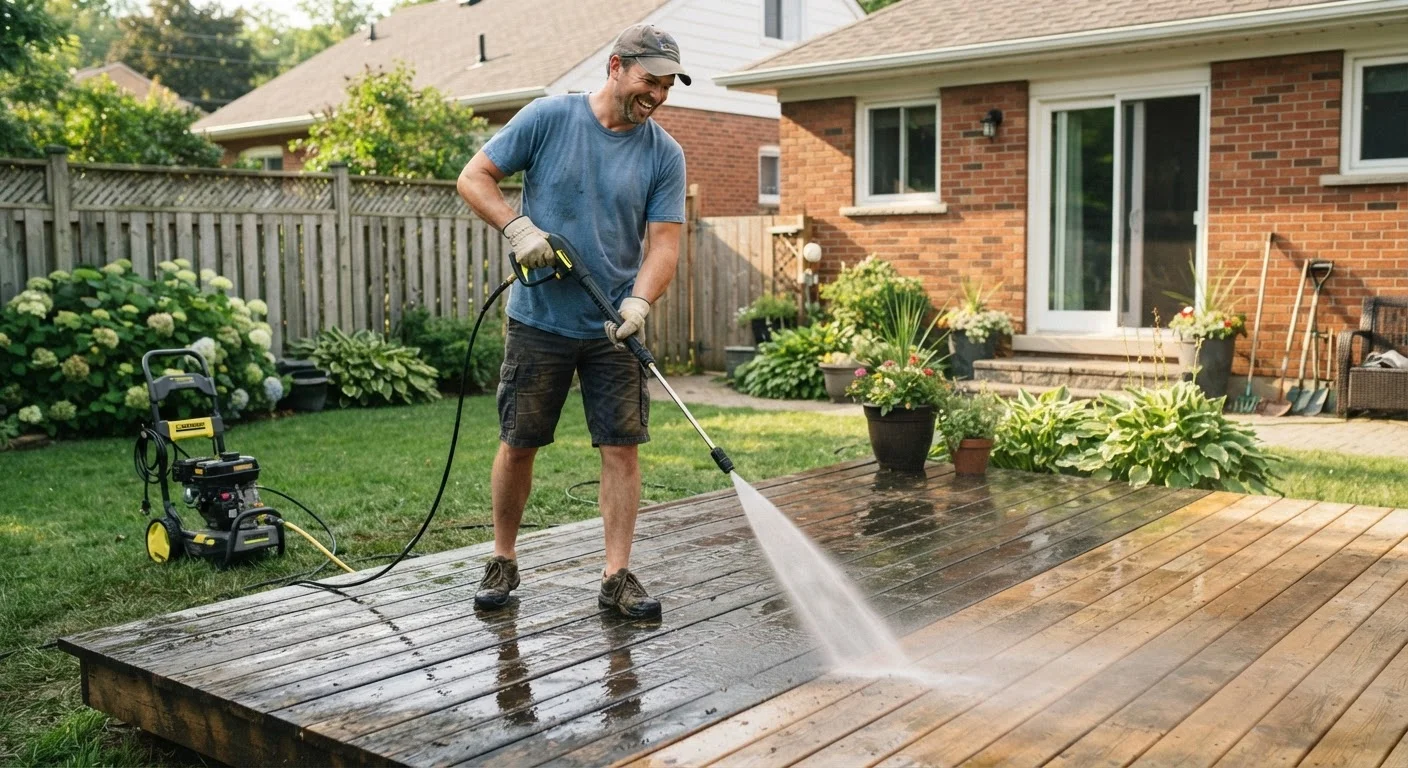
Photo: ResultsExplorer.com | Top Blogs For Everyone editorial
Key Takeaways
- Pressure washing effectively removes mold, mildew, and stubborn grime from hard surfaces like concrete and brick.
- Using too much pressure on wood, stucco, or older siding can cause lasting surface damage.
- Matching PSI and nozzle type to the specific surface is the single most important safety step.
- Some surfaces - including older painted wood and weathered mortar - are almost always better cleaned by hand.
- Water forced behind siding or window frames can lead to hidden moisture problems over time.
Removes mold, mildew, and algae efficiently
Pressure washing strips biological growth from hard surfaces more thoroughly than manual scrubbing, reducing slip hazards and preventing organisms from degrading surface materials over time.
Restores concrete and brick appearance quickly
Oil stains, dirt, and weathering that accumulate over years can be cleared in a single session, extending the visual and functional life of driveways and patios.
Prepares surfaces for painting or sealing
Cleaning a surface with a pressure washer before applying paint or waterproof sealer ensures better adhesion, since coatings applied over dirt or mildew fail much faster.
Faster than manual scrubbing for large areas
For expansive surfaces like long driveways or large deck boards, pressure washing can reduce cleaning time substantially compared to hand-scrubbing with brushes and hoses.
Reduces surface contaminants that accelerate deterioration
Algae and lichen retain moisture against a surface, which speeds up freeze-thaw cracking in concrete and rot in wood. Regular removal helps materials last longer.
High pressure damages soft or aged wood
Pressure washing natural wood siding, fencing, or older decking at standard residential PSI levels can raise the grain, splinter fibers, and leave the wood more susceptible to moisture absorption and rot.
Water intrusion behind siding causes hidden damage
Directing water at an upward angle or against gaps around windows and doors can force moisture behind exterior cladding, where it may go undetected until mold or rot develops.
Erodes mortar in older masonry
Aged mortar joints in brick walls and retaining structures are softer than modern mixes and can be washed out by pressure above 1,000-1,500 PSI, compromising structural integrity over time.
Strips paint and protective coatings prematurely
Painted surfaces that appear sound can lose their coating unevenly when pressure washed, creating areas where bare substrate is exposed to weathering before you can repaint.
Can crack or chip stucco finishes
Even hairline cracks in stucco can admit pressurized water beneath the surface layer, leading to delamination and subsurface moisture damage that is expensive to remedy properly.
Risk of personal injury from the equipment itself
The high-pressure stream from a pressure washer can cause serious lacerations if directed at skin. Proper footwear, eye protection, and keeping bystanders clear are essential precautions.
Where Pressure Washing Genuinely Helps
For certain surfaces, pressure washing delivers results that are difficult to match with manual scrubbing. Hard, non-porous materials handle high-pressure water well and benefit most from the method.
Removes mold, mildew, and algae efficiently
Pressure washing strips biological growth from hard surfaces more thoroughly than manual scrubbing, reducing slip hazards and preventing organisms from degrading surface materials over time.
Restores concrete and brick appearance quickly
Oil stains, dirt, and weathering that accumulate over years can be cleared in a single session, extending the visual and functional life of driveways and patios.
Prepares surfaces for painting or sealing
Cleaning a surface with a pressure washer before applying paint or waterproof sealer ensures better adhesion, since coatings applied over dirt or mildew fail much faster.
Faster than manual scrubbing for large areas
For expansive surfaces like long driveways or large deck boards, pressure washing can reduce cleaning time substantially compared to hand-scrubbing with brushes and hoses.
Reduces surface contaminants that accelerate deterioration
Algae and lichen retain moisture against a surface, which speeds up freeze-thaw cracking in concrete and rot in wood. Regular removal helps materials last longer.
Concrete driveways and sidewalks accumulate oil stains, algae, and embedded dirt that ordinary hoses cannot shift. A pressure washer running between 2,000 and 3,000 PSI (pounds per square inch) clears these efficiently. Brick and natural stone patios respond similarly, though mortar joints in older masonry require lower pressure to avoid erosion - typically under 1,500 PSI.
Composite decking - a material made from wood fiber and plastic - tolerates pressure washing better than natural wood, provided you use a fan-tip nozzle and keep the wand moving rather than holding it in one spot. Vinyl siding and gutters are also reasonable candidates, generally cleaned well at 1,200-1,500 PSI with a wide-angle nozzle.
Beyond aesthetics, removing mold, mildew, and algae from walkways reduces slip hazards, which is a practical safety benefit for households with children or older adults.
Surfaces That Are Frequently Damaged
The most common pressure washing mistakes involve applying high-pressure settings to materials that cannot withstand them. Understanding which surfaces fall into this category can save you a costly repair.
High pressure damages soft or aged wood
Pressure washing natural wood siding, fencing, or older decking at standard residential PSI levels can raise the grain, splinter fibers, and leave the wood more susceptible to moisture absorption and rot.
Water intrusion behind siding causes hidden damage
Directing water at an upward angle or against gaps around windows and doors can force moisture behind exterior cladding, where it may go undetected until mold or rot develops.
Erodes mortar in older masonry
Aged mortar joints in brick walls and retaining structures are softer than modern mixes and can be washed out by pressure above 1,000-1,500 PSI, compromising structural integrity over time.
Strips paint and protective coatings prematurely
Painted surfaces that appear sound can lose their coating unevenly when pressure washed, creating areas where bare substrate is exposed to weathering before you can repaint.
Can crack or chip stucco finishes
Even hairline cracks in stucco can admit pressurized water beneath the surface layer, leading to delamination and subsurface moisture damage that is expensive to remedy properly.
Risk of personal injury from the equipment itself
The high-pressure stream from a pressure washer can cause serious lacerations if directed at skin. Proper footwear, eye protection, and keeping bystanders clear are essential precautions.
Older wood siding and cedar shingles are particularly vulnerable. High pressure strips away surface fibers, leaving a roughened texture that holds moisture and accelerates rot - precisely the problem you were hoping to prevent. If you need to clean aged wood, a low-pressure rinse combined with a soft-bristle brush and appropriate cleaning solution is usually safer.
Stucco is another material that resists pressure washing poorly. Even minor cracks - invisible to the eye - can allow water to penetrate behind the surface layer, leading to the kind of hidden water damage described in our guide on signs of water damage you shouldn't ignore.
Window frames and door surrounds present a different problem: water forced around seals and into gaps can work its way into wall cavities. The damage may not appear immediately, but over a season or two it can produce mold, insulation degradation, and framing rot. This is the kind of maintenance misstep covered in home maintenance tasks homeowners routinely get wrong.
Getting the Settings Right
Pressure washers are sold or rented across a wide range of outputs - from around 1,300 PSI for entry-level electric models up to 4,000 PSI or more for commercial gas-powered units. Most residential cleaning tasks sit between 1,200 and 2,500 PSI. The nozzle angle matters as much as the raw pressure: a 0-degree (red) nozzle concentrates force into a pinpoint jet capable of cutting into soft materials; a 40-degree (white) or 65-degree (black) nozzle disperses the water into a gentler fan, better suited to most home surfaces.
A Note on Pressure and Nozzle Choice
Keeping the wand at least 12 inches from the surface and constantly sweeping - rather than holding still - distributes force evenly and reduces the risk of gouging or stripping. Starting at a lower setting and increasing gradually is always the safer approach.
For more overlooked but important upkeep habits, see our overview of lesser-known maintenance jobs that protect your home's structure.
1,500 PSI
Maximum recommended for most wood surfaces
Home improvement guidance from extension services and equipment manufacturers consistently suggests staying at or below this threshold for softwoods and painted surfaces.
2,500-3,000 PSI
Effective range for concrete cleaning
General industry guidance places this range as appropriate for unsealed concrete driveways and sidewalks where deep-set staining or algae is present.
The content provided on our blog site traverses numerous categories, offering readers valuable and practical information. Readers can use the editorial team’s research and data to gain more insights into their topics of interest. However, they are requested not to treat the articles as conclusive. The website team cannot be held responsible for differences in data or inaccuracies found across other platforms. Please also note that the site might also miss out on various schemes and offers available that the readers may find more beneficial than the ones we cover.