
How Cats Use Scent to Understand Their World

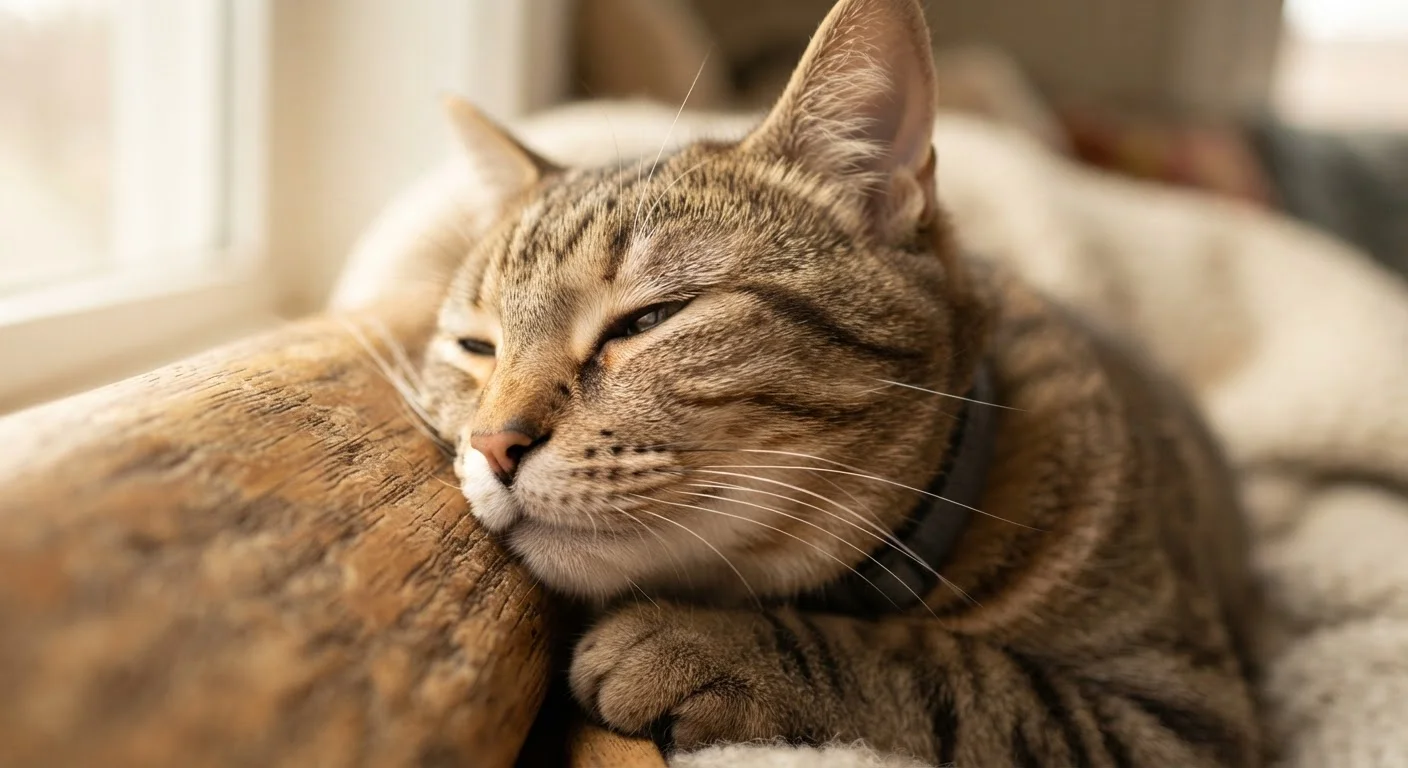
Photo: ResultsExplorer.com | Top Blogs For Everyone editorial
Key Takeaways
- Cats have roughly 200 million scent receptors — about 40 times more than humans.
- Facial rubbing deposits pheromones that mark a space as safe and familiar.
- Urine spraying and scratch marking are forms of scent communication, not spite or misbehavior.
- Disrupting a cat's scent landscape — through cleaning or rearranging — can cause real anxiety.
- Understanding scent behavior helps owners respond to territorial or stress-related problems more effectively.
A Nose That Does Much More Than Smell
A cat's olfactory system is not simply a more sensitive version of a human nose — it is a fundamentally different way of processing the world. With an estimated 200 million scent receptors compared to a human's roughly 5 million, cats extract detailed social and environmental information from chemical signals that are entirely invisible to us. Scent tells a cat who has been in an area, how recently, and what emotional state they were in when they passed through.
Cats also possess the vomeronasal organ, a secondary scent-processing structure that detects pheromones — chemical compounds produced by cats and other animals that carry non-verbal messages about reproductive status, identity, and threat level. When a cat performs the Flehmen response (that distinctive open-mouthed, slightly frozen expression after sniffing something intently), it is channeling molecules directly to this organ for deeper analysis. This isn't a sign of disgust; it's focused chemical reading.
~200M
Scent receptors in a cat's nose
Compared to approximately 5 million in humans, giving cats roughly 40 times greater olfactory sensitivity.
2
Scent-processing systems cats use
Cats use both the primary olfactory epithelium and the vomeronasal organ to analyze different classes of chemical signals simultaneously.
9+
Scent gland locations on a cat's body
Pheromone-producing glands are distributed across the cheeks, chin, forehead, paw pads, flanks, and the base of the tail.
What Cats Are Actually Saying With Scent
Every major scent behavior cats exhibit serves a communicative function. Understanding each one helps owners decode what might otherwise seem like random or frustrating conduct.
Facial Rubbing and Bunting
Cats have scent glands concentrated around the cheeks, chin, forehead, and the base of the tail. When a cat rubs its face against a chair leg, a doorframe, or your ankle, it is depositing a pheromone cocktail that effectively stamps that object or person as part of its familiar, safe world. Multicat households develop a shared "group scent" through mutual bunting — a social bonding mechanism. For owners, being bunted is a meaningful signal of trust. You can read more about these communicative signals in our guide to reading feline body language.
Scratch Marking
Scratch marks are dual-channel messages. They leave both a visible, physical sign and a scent deposit from glands located in the paw pads. Cats scratch prominent surfaces — often in high-traffic areas — because the goal is audience. A scratch mark on a doorframe communicates occupancy. This is why scratch marking on furniture is not misbehavior but a behavior that needs appropriate redirection rather than punishment. For more on the triggers behind scratching and other challenging conduct, see our article on common feline behavioural problems.
Urine Spraying
Urine spraying — deposited on vertical surfaces at nose height for other cats — carries dense chemical information, including identity and reproductive status. In unneutered cats, spraying is primarily reproductive signaling. In neutered cats, it most often signals stress, territorial insecurity, or the perceived intrusion of unfamiliar cats. Cleaning the spot without addressing the cause rarely resolves the behavior.
When Cleaning Near Scent-Marked Areas
The Cat's Scent Map — and Why Disrupting It Matters
A cat's home territory is not simply a physical space — it is a layered chemical map that the cat continuously reads and updates. Every piece of furniture, every threshold, and every familiar person carries scent information that tells the cat the environment is stable and safe. This scent landscape is called an olfactory signature, and its integrity is directly linked to a cat's emotional well-being.
Owners often inadvertently disrupt this map. Deep-cleaning with strongly scented products strips the pheromone deposits a cat has spent time building up. Moving furniture rearranges familiar scent anchors. Introducing new objects, people, or animals brings unfamiliar chemical signals into territory the cat considers mapped and secure. These changes can trigger visible stress responses — hiding, over-grooming, or increased spraying — that are often misread as behavioral problems. Cats who are already stressed may retreat and conceal signs of discomfort; our article on why cats hide when unwell explores that instinct in depth.
Practical steps that help maintain scent stability include using unscented or enzyme-based cleaners in areas the cat frequents, allowing a cat to investigate new objects before repositioning them, and giving new cats time in a separate room before integration — letting scents mingle gradually rather than forcing immediate contact.
Supporting Scent-Based Needs as Part of Enrichment
Recognizing scent communication as a genuine biological need — not a quirk or nuisance — changes how owners can support their cat's well-being. Providing surfaces appropriate for scratch marking, placing scratching posts at socially meaningful locations (near entry points, beside resting areas), and avoiding overwashing bedding or blankets all help maintain the scent continuity cats depend on.
For indoor cats especially, scent-based enrichment — introducing new safe scents like herbs, dried botanicals, or outdoor items — can provide meaningful mental stimulation. Feline enrichment for indoor cats covers this dimension of care in practical detail. A stable, scent-rich environment is not a luxury — it is part of what allows a cat to feel genuinely at home.
Frequently Asked Questions
The content provided on our blog site traverses numerous categories, offering readers valuable and practical information. Readers can use the editorial team’s research and data to gain more insights into their topics of interest. However, they are requested not to treat the articles as conclusive. The website team cannot be held responsible for differences in data or inaccuracies found across other platforms. Please also note that the site might also miss out on various schemes and offers available that the readers may find more beneficial than the ones we cover.