
Indoor vs Outdoor Cats: What the Evidence Says About Health and Wellbeing

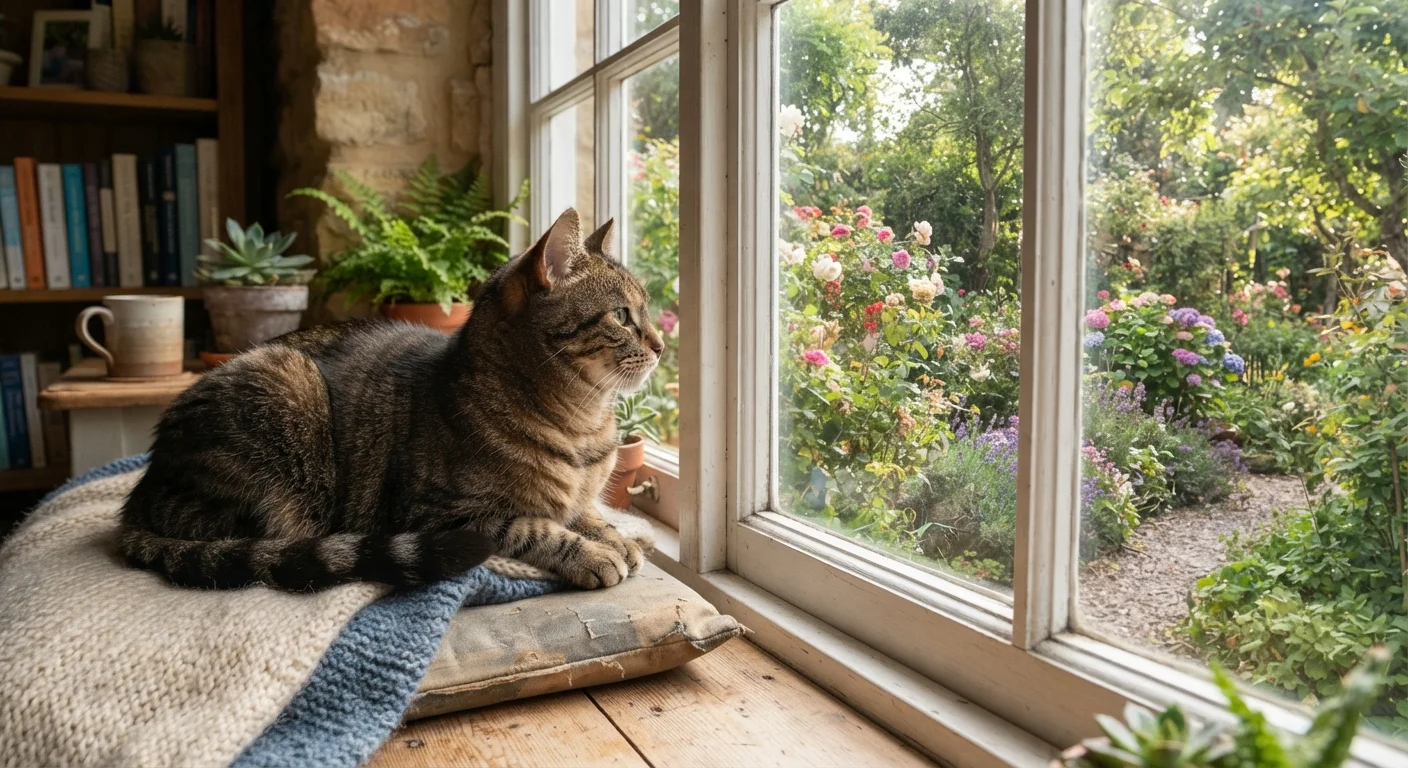
Photo: ResultsExplorer.com | Top Blogs For Everyone editorial
Key Takeaways
- Indoor cats live significantly longer on average than cats allowed outside unsupervised.
- Outdoor access exposes cats to traffic, predators, infectious disease, and toxins.
- Indoor cats face elevated risks of obesity, boredom, and stress-related behaviour problems.
- Enrichment and environmental complexity can offset most indoor lifestyle disadvantages.
- No single lifestyle suits every cat — individual temperament, health status, and local environment all matter.
Dramatically lower risk of fatal injury
Removal from traffic, predators, and territorial fights with other cats eliminates the leading causes of premature death in owned cats.
Reduced infectious disease exposure
Feline leukemia virus (FeLV) and feline immunodeficiency virus (FIV) are primarily transmitted through bites and close contact with infected cats — risks that are largely absent indoors.
Lower parasite burden
Indoor cats have significantly reduced exposure to fleas, ticks, intestinal worms, and outdoor-transmitted protozoal infections such as toxoplasmosis.
Easier monitoring of health changes
Owners can more readily observe changes in appetite, litter box habits, and behaviour when a cat is always in the home, enabling earlier veterinary intervention.
No contribution to wildlife predation
Keeping cats indoors prevents hunting of birds and small mammals, addressing both an ecological concern and a regulatory issue in some jurisdictions.
Higher risk of overweight and obesity
Without the caloric expenditure of outdoor territory patrolling and hunting, indoor cats are significantly more prone to weight gain, which in turn elevates risks of diabetes, joint disease, and hepatic lipidosis.
Reduced sensory and cognitive stimulation
Indoor environments offer a narrower range of smells, textures, and dynamic stimuli than the outdoors, which can lead to boredom, frustration, and stereotypic behaviours in cats with high predatory drive.
Increased stress in multi-cat households
Indoor cats cannot disperse to avoid social conflict the way outdoor cats can, making inter-cat tension and associated stress-related illness (such as feline idiopathic cystitis) more likely.
Litter box management demands
Indoor-only cats require consistent, clean litter provision; failures in hygiene or insufficient box numbers are a common trigger for inappropriate elimination and lower feline welfare scores.
The Lifespan Gap: What the Data Shows
Studies consistently report a striking difference in life expectancy between indoor-only and free-roaming cats. Indoor cats commonly live into their mid-to-late teens; outdoor or free-roaming cats have a median lifespan estimated at two to five years in some populations, though well-cared-for outdoor cats in low-risk environments often live considerably longer. The disparity is driven primarily by acute causes: vehicle collisions, predation, and infectious disease — not by any inherent biological advantage of being indoors.
This lifespan difference does not mean outdoor life is uniformly harmful, but it does underscore the scale of environmental risk that unmanaged outdoor access introduces. Understanding which risks are most significant in your local context is the first step toward an informed decision. You can also check our evidence-based corrections to common cat health myths for context on how feline biology is frequently misunderstood.
10–15 yrs
Typical indoor cat lifespan
Veterinary sources commonly cite 12–18 years as attainable for well-cared-for indoor cats, with many reaching their late teens.
2–5 yrs
Median lifespan for free-roaming cats
Research on unowned and outdoor cat populations in North America reports median lifespans substantially below those of indoor counterparts, largely due to trauma and disease.
~50%
Indoor cats affected by overweight
Veterinary epidemiological surveys in the US estimate that roughly half of domestic cats are overweight or obese, a condition more prevalent in indoor-only populations.
Advantages and Disadvantages of an Indoor Lifestyle
Keeping a cat exclusively indoors eliminates several of the most statistically common causes of early death and injury. However, the controlled environment that protects a cat can also deprive it of behavioural opportunities its biology is built around.
Dramatically lower risk of fatal injury
Removal from traffic, predators, and territorial fights with other cats eliminates the leading causes of premature death in owned cats.
Reduced infectious disease exposure
Feline leukemia virus (FeLV) and feline immunodeficiency virus (FIV) are primarily transmitted through bites and close contact with infected cats — risks that are largely absent indoors.
Lower parasite burden
Indoor cats have significantly reduced exposure to fleas, ticks, intestinal worms, and outdoor-transmitted protozoal infections such as toxoplasmosis.
Easier monitoring of health changes
Owners can more readily observe changes in appetite, litter box habits, and behaviour when a cat is always in the home, enabling earlier veterinary intervention.
No contribution to wildlife predation
Keeping cats indoors prevents hunting of birds and small mammals, addressing both an ecological concern and a regulatory issue in some jurisdictions.
Higher risk of overweight and obesity
Without the caloric expenditure of outdoor territory patrolling and hunting, indoor cats are significantly more prone to weight gain, which in turn elevates risks of diabetes, joint disease, and hepatic lipidosis.
Reduced sensory and cognitive stimulation
Indoor environments offer a narrower range of smells, textures, and dynamic stimuli than the outdoors, which can lead to boredom, frustration, and stereotypic behaviours in cats with high predatory drive.
Increased stress in multi-cat households
Indoor cats cannot disperse to avoid social conflict the way outdoor cats can, making inter-cat tension and associated stress-related illness (such as feline idiopathic cystitis) more likely.
Litter box management demands
Indoor-only cats require consistent, clean litter provision; failures in hygiene or insufficient box numbers are a common trigger for inappropriate elimination and lower feline welfare scores.
Outdoor Risks Worth Taking Seriously
Traffic remains the single largest cause of premature death in owned outdoor cats in urban and suburban settings. Beyond roads, outdoor cats face bite wounds from other cats (a primary route for feline immunodeficiency virus transmission), exposure to rodenticide-poisoned prey, contact with infected wildlife, and parasites including fleas, ticks, and intestinal worms. Cats in rural settings additionally encounter predation risk from coyotes, birds of prey, and other wildlife.
Outdoor cats also contribute to songbird and small mammal mortality — a documented ecological concern recognised by wildlife biologists and relevant to owners in many regions. This is worth considering alongside the welfare calculus for the individual cat.
Vaccination Still Matters for Indoor Cats
Making Indoor Life Work for Your Cat
The strongest argument against indoor-only keeping is behavioural: cats are obligate hunters whose stress responses, territorial needs, and sensory stimulation requirements are not automatically met by four walls. Obesity, redirected aggression, inappropriate elimination, and compulsive behaviours are all more commonly reported in under-stimulated indoor cats.
The good news is that these risks are largely preventable. Vertical space (cat trees, shelving), foraging feeders, regular interactive play sessions, window perches, and multi-cat household management all meaningfully reduce stress indicators in research settings. For a detailed, practical approach, see our guide on feline enrichment for indoor cats.
Older cats present a particular consideration: as mobility and sensory acuity decline, both outdoor hazards and indoor barriers need reassessment. Our article on senior feline care covers how to adapt environments as cats age.
Compromise Options: Managed Outdoor Access
Several approaches allow cats access to outdoor stimulation while limiting the most serious risks. Enclosed outdoor runs (often called 'catios') provide fresh air, natural light, and sensory variety without exposure to traffic or other cats. Leash and harness walking is effective for cats introduced to it gradually from a young age. Supervised garden time in a securely fenced yard is a lower-infrastructure option, though it requires an owner to be present throughout.
These managed approaches are not suitable for every cat — some individuals are too stressed by outdoor exposure regardless of supervision — but for cats who show strong motivation to go outside, they represent a meaningful middle path supported by veterinary welfare bodies.
This article provides general educational information about feline care and is not a substitute for advice from a licensed veterinarian who knows your individual cat.
The content provided on our blog site traverses numerous categories, offering readers valuable and practical information. Readers can use the editorial team’s research and data to gain more insights into their topics of interest. However, they are requested not to treat the articles as conclusive. The website team cannot be held responsible for differences in data or inaccuracies found across other platforms. Please also note that the site might also miss out on various schemes and offers available that the readers may find more beneficial than the ones we cover.