
Introducing a New Cat to a Resident Pet Without the Chaos

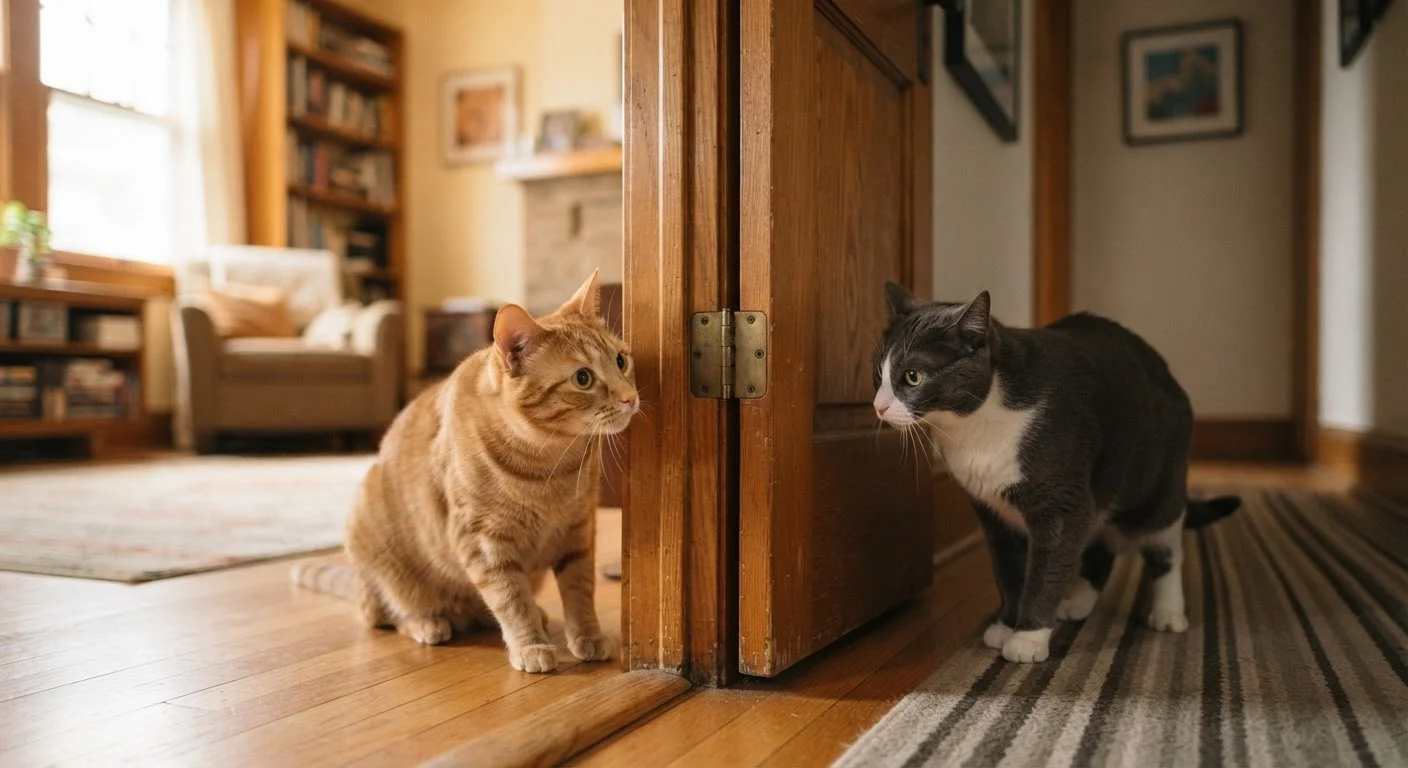
Photo: ResultsExplorer.com | Top Blogs For Everyone editorial
Key Takeaways
- Cats are territorial by nature; rushing introductions almost always creates lasting conflict.
- Scent swapping before any visual contact is the single most effective preparation step.
- A dedicated safe room for the new cat reduces stress for both animals throughout the process.
- Cat-to-dog introductions require the dog to be reliably leash-controlled before any face-to-face meeting.
- Stress signals like flattened ears or a puffed tail mean you need to slow down, not push forward.
- Most successful introductions take two to four weeks — patience is the critical variable.
Why the First Few Days Set the Tone
Cats are asocial hunters with well-defined home territories. Unlike dogs, they did not evolve strong pressure to form social bonds with unfamiliar conspecifics, which means that an unmanaged first meeting can trigger a threat response that lingers for months. Research in applied animal behaviour consistently shows that gradual, structured introductions — ones that let each animal build a positive scent association before visual or physical contact — result in significantly better long-term coexistence than free-roaming meet-and-greets.
Before you begin, ensure both animals are healthy and, where appropriate, spayed or neutered. Intact animals carry stronger territorial hormonal drives that complicate social integration. Confirm your resident pet is up to date on vaccinations and that the new cat has been health-screened by a veterinarian.
What you will need
Step-by-Step Introduction Process
Follow the steps below in sequence. Moving to the next stage should depend on calm, relaxed behaviour from both animals — not on how many days have passed. Use your knowledge of feline body language throughout: a tucked tail, flattened ears, hissing, or a puffed coat are signs to pause and hold the current phase longer.
Set up a dedicated safe room for the new cat
Place the new cat's food, water, litter box, bedding, and a hiding spot (such as a covered carrier left open) in a single room before the cat arrives. Keep the door closed. This room becomes the cat's entire world for at least the first three to five days, allowing it to decompress without any contact with the resident pet.
Exchange scents before any visual contact
After 48 hours, rub a clean cloth along the new cat's cheeks and chin (where scent glands are concentrated) and place it near the resident pet's feeding area. Do the same in reverse. Feed both animals near their respective sides of the closed door. Repeat daily until both animals eat calmly with the scented cloth present — this signals a neutral or positive association with the unfamiliar scent.
Introduce scent via bedding swap
Swap sleeping blankets or bedding between the animals so each is resting on the other's scent. Observe body language closely: sniffing without growling or retreating is a positive sign. Freezing, hissing, or immediate retreat indicates more time is needed at the scent-only phase.
Allow sight contact through a barrier
Crack the door a few centimetres or use a baby gate so the animals can see and smell each other without direct access. Conduct these sessions while both animals are engaged with food or a toy — never when either is already stressed or post-conflict. Keep initial sessions short: two to three minutes, ending before any escalation occurs. Gradually increase duration over several days as both animals remain calm.
Facilitate supervised, free-roam meetings
Only once both animals consistently eat, play, and rest near the barrier without tension should you open the door for monitored contact. Stay present but relaxed — your own calm body language matters. Provide multiple vertical escape routes (cat trees, shelves) and never corner either animal. End the session and return the new cat to its safe room at the first sign of genuine distress from either party. Gradually extend these sessions over days to weeks.
Transition to shared living space
When multiple supervised sessions have passed without hissing, swatting, or prolonged stalking, the animals are ready to share the home more freely. Continue to provide one litter box per cat plus one extra, multiple feeding stations in separate locations, and enough vertical space so each cat can claim territory without conflict. Monitor for subtle tension signs — one cat consistently blocking another's access to food, water, or the litter box is a form of social aggression that warrants attention.
Patience Is the Active Ingredient
Specific Considerations for Cat-to-Dog Introductions
When your resident pet is a dog, the safety calculus shifts. A dog that reliably responds to sit, stay, and leave it commands is a prerequisite before any visual introduction. Keep the dog on a leash for all early face-to-face sessions; never allow the dog to chase the cat even in play, as a single chase incident can permanently heighten the cat's fear response.
Allow the cat to dictate the pace of approach entirely. Provide the cat with elevated escape routes — shelving, cat trees, or gated rooms — so it always has a way out. Dogs that have previously shown high prey drive toward small animals may need professional behavioural guidance; this article covers standard introductions and is not a substitute for that support. If your dog tends to become overly excited, refer to crate training as a management tool to give the dog its own calm retreat during the adjustment period.
High Prey Drive Dogs Need Extra Caution
If either animal shows persistent aggression, elimination outside the litter box, or stops eating during the introduction period, consult a veterinarian or a certified applied animal behaviourist. These signs can indicate stress levels that warrant professional intervention, and they are also explored in detail in our guide to common feline behavioural problems.
The content provided on our blog site traverses numerous categories, offering readers valuable and practical information. Readers can use the editorial team’s research and data to gain more insights into their topics of interest. However, they are requested not to treat the articles as conclusive. The website team cannot be held responsible for differences in data or inaccuracies found across other platforms. Please also note that the site might also miss out on various schemes and offers available that the readers may find more beneficial than the ones we cover.