
Wet Food and Dry Food: Understanding the Real Differences for Your Cat

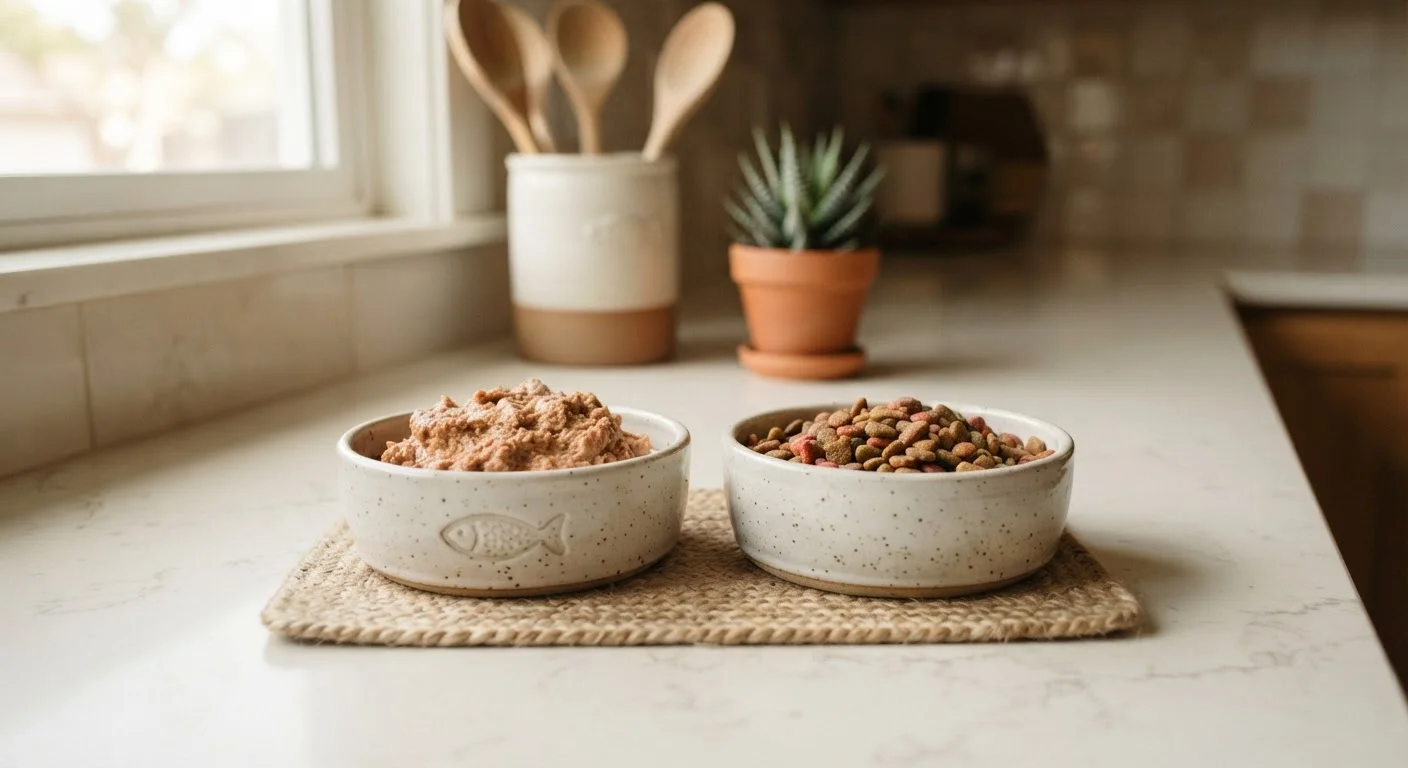
Photo: ResultsExplorer.com | Top Blogs For Everyone editorial
Key Takeaways
- Wet food typically contains 70–80% moisture, helping cats meet hydration needs they rarely fulfil through drinking alone.
- Dry food is more calorie-dense per gram; free-feeding kibble can contribute to weight gain in less active cats.
- Neither format is universally superior — the right choice depends on your cat's health, age, and individual preferences.
- Cats with urinary tract or kidney conditions often benefit significantly from the increased hydration wet food provides.
- Many veterinarians recommend a mixed feeding approach to balance convenience with nutritional variety.
Moisture Content: The Most Important Difference
Cats evolved as desert hunters whose primary hydration came from prey — animals with roughly 70% water content. Domestic cats retain this biology: they have a naturally low thirst drive and often do not drink enough water on their own to compensate for a dry-food-only diet.
Wet cat food mirrors the moisture profile of prey, containing approximately 70–80% water by weight. Dry kibble, by contrast, typically contains only 6–10% moisture. This gap has real physiological consequences. Cats fed exclusively dry food tend to produce more concentrated urine, which is a known risk factor for the development of urinary crystals and lower urinary tract disease.
For cats with existing kidney disease or a history of urinary problems, veterinarians frequently recommend increasing wet food in the diet specifically to raise fluid intake. Even in healthy cats, the additional hydration from wet food reduces strain on the kidneys over time. This is not a minor distinction — it is arguably the single most clinically significant difference between the two formats. See our guide to feline nutrition at every life stage for how hydration needs shift as cats age.
| Criterion | Wet Cat Food | Dry Cat Food (Kibble) |
|---|---|---|
| Moisture content | 70–80% | 6–10% |
| Hydration support | High — significant contribution | Low — minimal contribution |
| Calories per gram | Lower — more volume per calorie | Higher — calorie-dense |
| Dental abrasion | Minimal | Modest mechanical effect |
| Shelf life once served | 24–48 hours refrigerated | Hours to all day, room temperature |
| Palatability | Generally high; aromatic | Variable; depends on cat |
| Cost per serving | Typically higher | Typically lower |
| Suited to urinary/kidney health | Yes — often recommended | Less ideal without extra water intake |
Protein, Fat, and Caloric Density
On a dry-matter basis — meaning after accounting for the water content — both wet and dry foods can deliver comparable protein levels. However, the way calories are packaged differs meaningfully in practice.
Dry kibble is calorie-dense: a small volume contains a significant number of calories, which makes it easy for cats to overconsume, especially when food is left out all day (a practice called free-feeding or ad libitum feeding). Obesity is one of the most common preventable health conditions in domestic cats, and free-fed dry food is a contributing factor in many cases.
Wet food provides more volume per calorie, which means cats tend to feel satiated with an appropriate serving size. This can be a meaningful advantage for less active cats — including many indoor cats. Our article on indoor versus outdoor cat health explores how lifestyle affects a cat's overall caloric and activity needs.
70–80%
Moisture in wet cat food
Wet food closely approximates the water content of the small prey animals cats evolved to hunt and eat.
~60%
Of cats may be overweight or obese
The Association for Pet Obesity Prevention has consistently found high rates of overweight cats in its annual US veterinary surveys, with diet composition and free-feeding cited as contributing factors.
85%
Of cats show periodontal disease by age 3
According to the American Veterinary Dental College, periodontal disease is the most common clinical condition in adult cats — underscoring that food texture alone is insufficient for dental health.
High-quality examples of both formats can meet a cat's protein requirements, but always look for foods where a named animal protein — such as chicken, salmon, or turkey — appears as the first ingredient. The truth behind common cat health myths covers several misconceptions about what cats actually need from their diet.
Dental Health, Palatability, and Practical Feeding
A widely cited argument for dry food is dental benefit: the theory is that crunching kibble mechanically scrapes plaque from teeth. Veterinary dental research suggests this effect is modest at best. The mechanical action may offer some minor abrasion, but kibble alone does not prevent periodontal disease — the most common disease in adult cats. Tooth brushing and professional veterinary dental cleanings remain the gold standard for feline oral health.
Palatability is another practical consideration. Many cats find wet food more appealing due to its aroma and texture, which can be useful when encouraging a reluctant or recovering eater. Older cats with dental pain or tooth loss may also find wet food far easier to consume.
On the practical side, dry food wins on convenience: it can sit in a bowl for hours without spoiling, making it compatible with timed feeders and multi-cat households. Wet food, once opened, should be refrigerated and used within 24–48 hours to prevent spoilage and bacterial growth.
A mixed feeding approach — scheduled wet food meals plus a measured portion of dry kibble — is a strategy many veterinary nutritionists consider reasonable for healthy adult cats, as it balances hydration benefits with feeding flexibility. Any dietary change should be discussed with your veterinarian, who can tailor recommendations to your cat's specific health history.
When to Ask Your Vet About Diet
This article provides general educational information about cat nutrition and is not a substitute for personalised veterinary advice. Always consult a licensed veterinarian before making significant changes to your cat's diet, especially if your cat has an existing health condition.
The content provided on our blog site traverses numerous categories, offering readers valuable and practical information. Readers can use the editorial team’s research and data to gain more insights into their topics of interest. However, they are requested not to treat the articles as conclusive. The website team cannot be held responsible for differences in data or inaccuracies found across other platforms. Please also note that the site might also miss out on various schemes and offers available that the readers may find more beneficial than the ones we cover.