
What Cats Actually Need From Their Diet at Every Life Stage

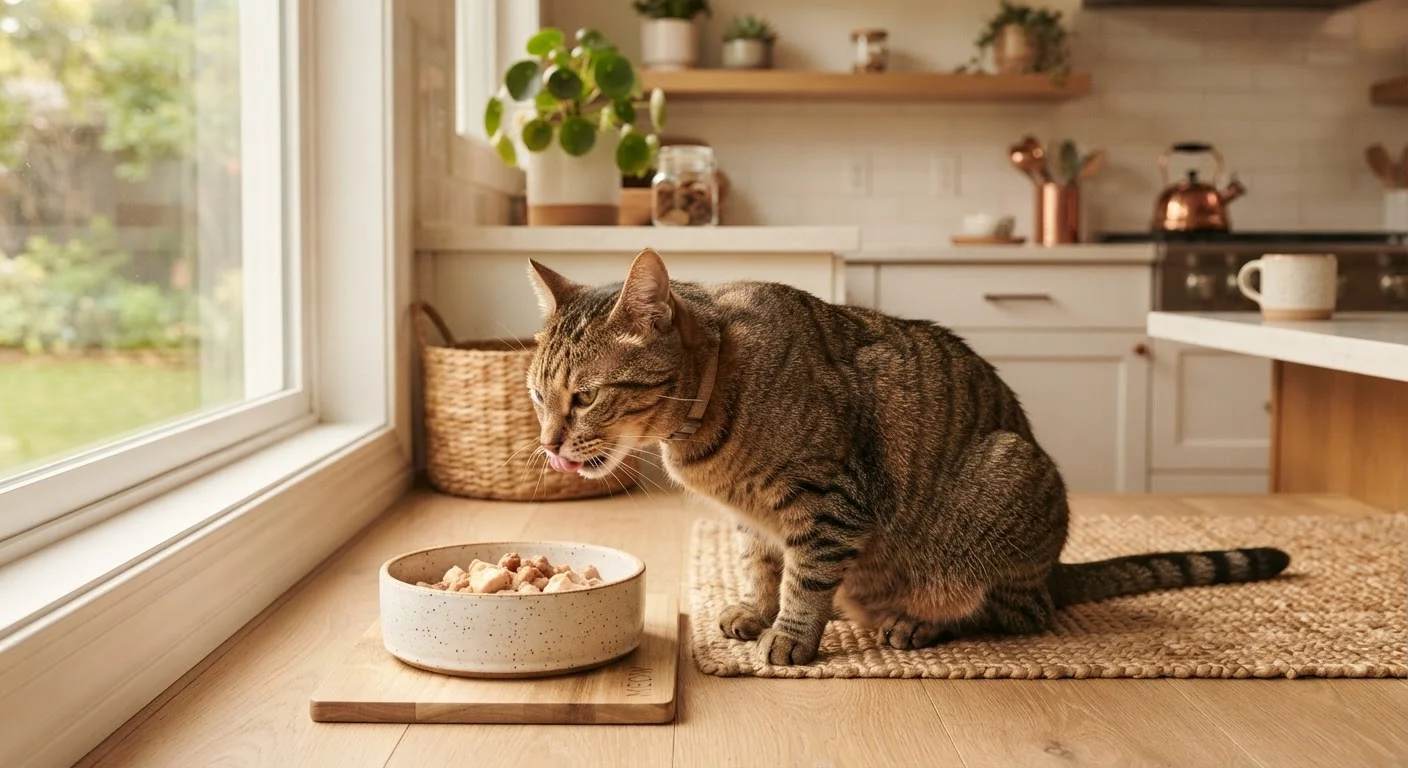
Photo: ResultsExplorer.com | Top Blogs For Everyone editorial
Key Takeaways
- Cats are obligate carnivores and require animal-sourced protein at every life stage.
- Kittens need significantly more protein, fat, and calories per pound of body weight than adults.
- Adult cats benefit from controlled calorie intake to prevent obesity, a leading health risk.
- Senior cats often need highly digestible protein and adjusted phosphorus levels to support aging kidneys.
- Hydration is critical at all life stages; many cats have a low thirst drive and benefit from wet food.
- Always choose food labeled AAFCO-complete for your cat's specific life stage.
Why Life Stage Matters for Feline Nutrition
A cat's body changes dramatically from birth through old age, and those changes demand different nutritional support. Feeding a kitten the same diet as a healthy adult — or an adult the same as an aging senior — can mean either shortfalls or excesses that accumulate into real health consequences over time.
Unlike many mammals, cats are obligate carnivores: their metabolism is built around animal protein as a primary energy source, and they lack the enzymatic pathways other species use to manufacture certain nutrients from plant material. This biological reality holds true at every life stage, but the specific quantities and ratios required shift considerably as cats grow, plateau, and age.
Just as nutritional needs shift across human life stages, feline dietary requirements are not static. Understanding what your cat's body actually needs — and when — is the foundation of proactive, preventive care.
~58%
Of US cats estimated to be overweight or obese
According to the Association for Pet Obesity Prevention, excess weight is among the most common preventable health problems in domestic cats.
2–3×
More calories per pound needed by kittens vs. adults
Kittens' rapid growth and development require significantly greater caloric and nutrient density than maintenance-stage adult feeding.
30–40%
Of cats over 10 affected by chronic kidney disease
CKD prevalence rises sharply in older cats, making dietary phosphorus and protein quality especially important in senior-stage nutrition planning.
Kitten Stage: Fueling Rapid Growth
From birth to approximately 12 months, kittens are in one of the most metabolically demanding phases of their lives. They need roughly two to three times more calories per pound of body weight than adult cats, along with elevated levels of protein, fat, calcium, and phosphorus to support bone development, muscle growth, and immune system maturation.
Taurine — an amino acid found exclusively in animal tissue — is particularly critical during kittenhood. A deficiency can cause dilated cardiomyopathy (a serious heart condition) and retinal degeneration, both of which are largely preventable with a properly formulated diet.
Kittens should be fed food carrying an AAFCO statement specifically for growth or all life stages. Frequency matters too: young kittens typically do best with three or four small meals per day rather than one or two larger ones, as their small stomachs have limited capacity and their blood sugar benefits from consistency.
Introduce New Foods Gradually
Adult Stage: Maintaining Balance and Preventing Obesity
Once a cat reaches physical maturity — generally around 12 months for most breeds — caloric needs stabilize and the priority shifts from building to maintaining. Adult cats between roughly one and seven years of age benefit from a diet that sustains lean muscle mass while avoiding excess calories that contribute to weight gain.
Obesity is one of the most common preventable health problems in domestic cats, and it significantly elevates risk for diabetes, joint disease, and hepatic lipidosis (fatty liver disease). Controlled portion feeding, rather than free-choice grazing, is typically the most effective approach for calorie management in indoor or low-activity cats.
Hydration remains a quiet but important consideration at this stage. Cats evolved as desert-adapted animals with a naturally low thirst drive, which means many do not drink enough water when fed exclusively dry food. Incorporating wet food — even partially — can meaningfully support kidney and urinary tract health. Our article on wet food versus dry food for cats explores this in more depth.
Senior Stage: Supporting an Aging Body
Cats are generally considered senior from around age seven, and geriatric from around eleven or twelve. At this stage, several physiological changes affect how food should be chosen and offered.
Digestive efficiency often declines with age, meaning older cats may absorb protein and fat less effectively even when eating the same amount. Rather than simply feeding more, the solution is typically highly digestible protein sources that support muscle maintenance without placing unnecessary strain on the kidneys — an organ that becomes more vulnerable in older cats.
Chronic kidney disease (CKD) is one of the most prevalent conditions in senior cats, and phosphorus restriction is a common dietary intervention recommended by veterinarians for cats already diagnosed with reduced kidney function. This is not a modification to make independently — phosphorus management should be guided by bloodwork and veterinary oversight.
For a broader look at supporting older cats holistically, see our guide on keeping an ageing cat comfortable.
Practical Guidance for Every Stage
Regardless of your cat's age, a few principles apply universally. First, always verify that any food you purchase carries an AAFCO nutritional adequacy statement for the appropriate life stage — this is the clearest indicator that minimum standards have been met. Second, transitions between foods should be gradual (typically over seven to ten days) to avoid gastrointestinal upset. Third, body condition scoring — a simple hands-on assessment of fat coverage over the ribs and spine — is a reliable tool for evaluating whether your cat is at a healthy weight.
Supplements are rarely necessary when feeding a complete and balanced diet, and some can cause harm if given in excess. Always consult your veterinarian before adding anything to your cat's feeding regimen.
Diet is only one dimension of feline wellbeing. Environmental enrichment plays a meaningful role in maintaining a healthy weight and reducing stress-related health issues, particularly for indoor cats.
This article provides general nutritional information for educational purposes only and is not a substitute for personalized veterinary advice. Consult your veterinarian for guidance tailored to your individual cat's health, age, and medical history.
Frequently Asked Questions
The content provided on our blog site traverses numerous categories, offering readers valuable and practical information. Readers can use the editorial team’s research and data to gain more insights into their topics of interest. However, they are requested not to treat the articles as conclusive. The website team cannot be held responsible for differences in data or inaccuracies found across other platforms. Please also note that the site might also miss out on various schemes and offers available that the readers may find more beneficial than the ones we cover.