
Misconceptions About 'Dangerous' Destinations That Deserve a Second Look

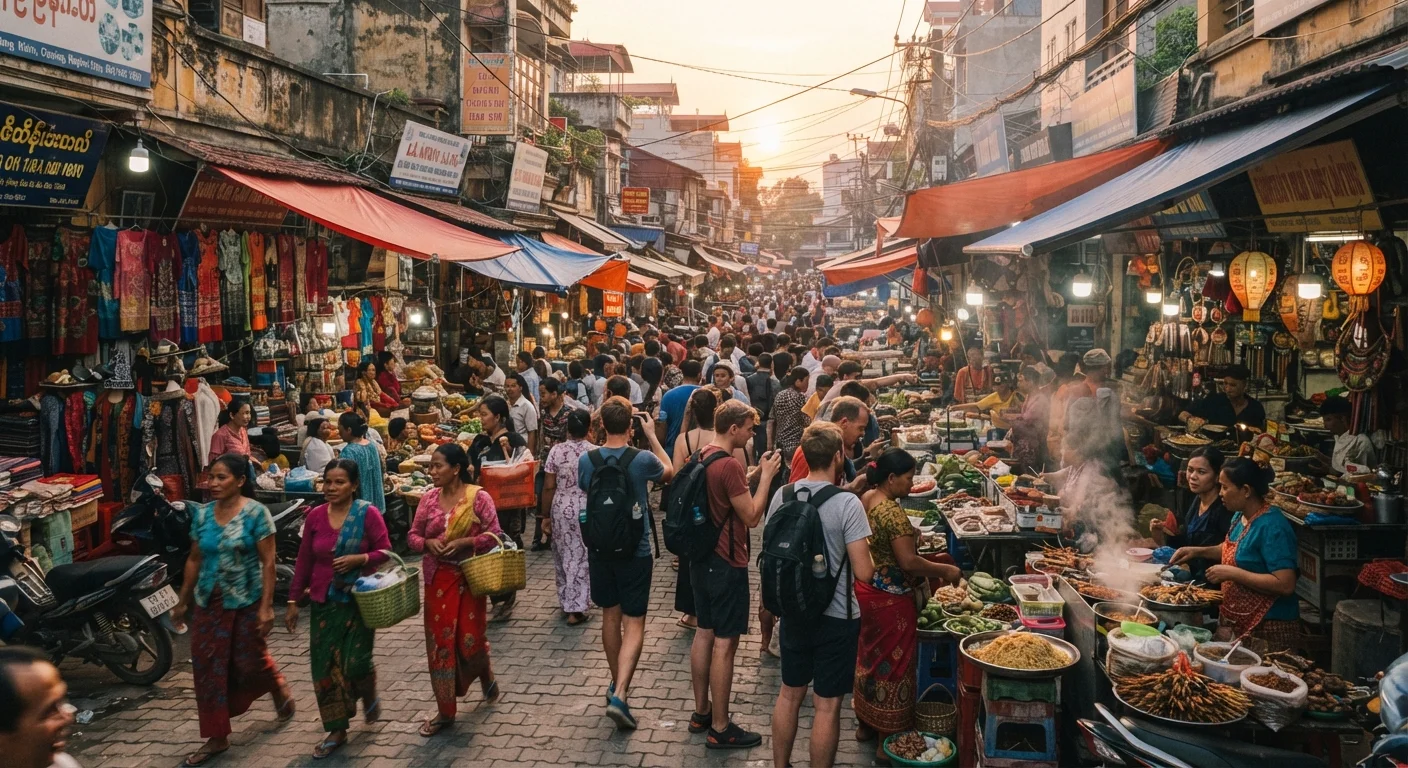
Photo: ResultsExplorer.com | Top Blogs For Everyone editorial
Key Takeaways
- Government travel advisories cover entire countries, but risk varies significantly by region and neighborhood.
- Media coverage disproportionately amplifies crime and conflict, creating a distorted picture of daily life abroad.
- Consulting multiple sources — including recent traveler reports and local news — gives a more accurate safety picture.
- Practical awareness habits reduce risk far more effectively than avoiding entire countries based on reputation alone.
- Many frequently avoided destinations have well-established tourism infrastructure and lower crime rates than assumed.
Why 'Dangerous Destination' Labels Stick — and Why They're Often Wrong
A single high-profile incident can define a country's international reputation for years, long after conditions on the ground have changed. News cycles reward alarm, and dramatic headlines about violence, kidnapping, or political unrest in a foreign country generate far more engagement than stories about peaceful daily life in those same places. The result is a persistent gap between perception and reality that shapes millions of travel decisions.
That gap has real consequences. Travelers skip destinations that are largely safe and welcoming. Local tourism economies — often dependent on international visitors — suffer. And the travelers themselves miss out on experiences they'd have found rewarding. This article addresses some of the most entrenched misconceptions, using publicly available safety data and advisory frameworks to separate genuine risk from media distortion.
For a broader look at how planning decisions get tangled up in myths, see trip planning myths that lead travelers astray. And if you want to go deeper on evaluating a destination before you book, our guide to researching destination health risks walks through reliable sourcing step by step.
Common Myths — and What the Evidence Actually Shows
The myths below represent some of the most frequently repeated assumptions about international travel safety. Each one contains a kernel of truth that gets stretched far beyond what data supports.
Myth
An entire country must be unsafe if its government travel advisory is elevated.
Fact
Travel advisories apply to whole countries but frequently specify that danger is limited to particular regions, border areas, or activity types — leaving major tourist areas unaffected.
The U.S. State Department's Level 3 ('Reconsider Travel') designation for a country like Colombia or South Africa does not mean the capital city's tourist districts are as dangerous as a conflict zone in that same country. Advisory documents routinely include regional breakdowns. Reading the full text of an advisory — not just the headline level — almost always reveals a more nuanced picture. Treating a national advisory as a uniform verdict on every city, neighborhood, and travel context in that country leads to decisions that aren't supported by the underlying data.
Myth
High-profile crime news means a destination's crime rate is above average globally.
Fact
Media coverage of crime correlates with newsworthiness, not statistical frequency. Many widely-reported destinations have crime rates comparable to or lower than major U.S. cities in some categories.
Violent incidents involving foreigners abroad generate international coverage precisely because they're unusual enough to be newsworthy. Routine crime in a city — the kind that happens everywhere — rarely makes headlines outside that country. This creates a distorted sample that leads travelers to overestimate risk. Comparing verified crime statistics, where available, with cities travelers already feel comfortable visiting often produces a surprising result: the 'dangerous' destination may be statistically safer than places closer to home.
Myth
Destinations with political instability are uniformly dangerous for tourists.
Fact
Political unrest — protests, elections, governmental crises — rarely translates directly into risk for tourists who avoid specific flashpoints and stay informed.
Political instability and personal safety risk for travelers are related but distinct concepts. Countries in the midst of political transitions or recurring protests often maintain functioning tourism infrastructure in areas tourists frequent. The practical guidance from most advisories in these situations is specific: avoid demonstrations, monitor local news, and have a contingency communication plan. Travelers who apply basic situational awareness in politically unstable destinations often report uneventful trips. The key is knowing where instability is concentrated and planning accordingly.
Myth
Regions with a history of conflict are still too dangerous to visit today.
Fact
Post-conflict regions can recover significantly within years, with some becoming established tourist destinations long before their reputations catch up.
Colombia's Medellín, Rwanda, and the Western Balkans are frequently cited examples of destinations that carry heavy historical associations with violence but have undergone documented, measurable improvements in safety and tourism infrastructure. Reputations lag reality — sometimes by a decade or more. Checking current State Department advisories, recent independent travel journalism, and OSAC reports gives a far more accurate picture than relying on what a destination was known for in the past. Historical context matters, but it should inform preparation, not serve as a substitute for current data.
Myth
Food and water abroad are inherently dangerous, especially in developing countries.
Fact
Food and water risks vary substantially by specific location, establishment, and preparation — and are manageable with targeted precautions rather than blanket avoidance.
The framing that food abroad is 'dangerous' lumps together a wide range of actual risk levels. Street food from a high-turnover stall with visibly cooked food may be considerably safer than a buffet at a mid-range hotel. The variables that actually predict risk include water source, food handling practices, and cooking temperature — not whether the setting looks informal or 'foreign.' Our guide on food and water safety on the road covers the specific habits and precautions that make a practical difference, rather than recommending wholesale avoidance of local cuisine.
Don't Ignore Advisories — Read Them Carefully
How to Form Your Own Accurate Risk Assessment
The most reliable approach to evaluating a destination combines several sources rather than relying on any single one. Start with your government's official travel advisory — the U.S. State Department's advisory system uses a four-level scale — but read the full text, not just the headline level. Advisories frequently note that risk is concentrated in specific regions or circumstances, not country-wide.
Cross-reference with recent traveler accounts on established forums, local English-language news outlets, and organizations like the Overseas Security Advisory Council (OSAC), which publishes country-specific crime and safety reports for U.S. citizens abroad. Pay attention to what kind of incidents are reported and where they occur — this tells you far more than a blanket warning.
Situational awareness matters more than destination choice for most travelers. Our guide on building situational awareness anywhere covers the practical habits that keep travelers confident and alert. Separately, understanding common targeting tactics — covered in our piece on scams and tourist targeting — is relevant regardless of which country you visit.
For a richer pre-trip approach that goes beyond safety checklists, see reading a destination before you go, which addresses how history, politics, and local context shape any travel experience. More resources are available in the Travel Safety & Health hub.
This article provides general travel information and education only. Always verify entry requirements, current advisories, and safety conditions with official government sources and your travel provider before making any trip decisions.
The content provided on our blog site traverses numerous categories, offering readers valuable and practical information. Readers can use the editorial team’s research and data to gain more insights into their topics of interest. However, they are requested not to treat the articles as conclusive. The website team cannot be held responsible for differences in data or inaccuracies found across other platforms. Please also note that the site might also miss out on various schemes and offers available that the readers may find more beneficial than the ones we cover.