
Destination Health Risks: How to Research Before You Book

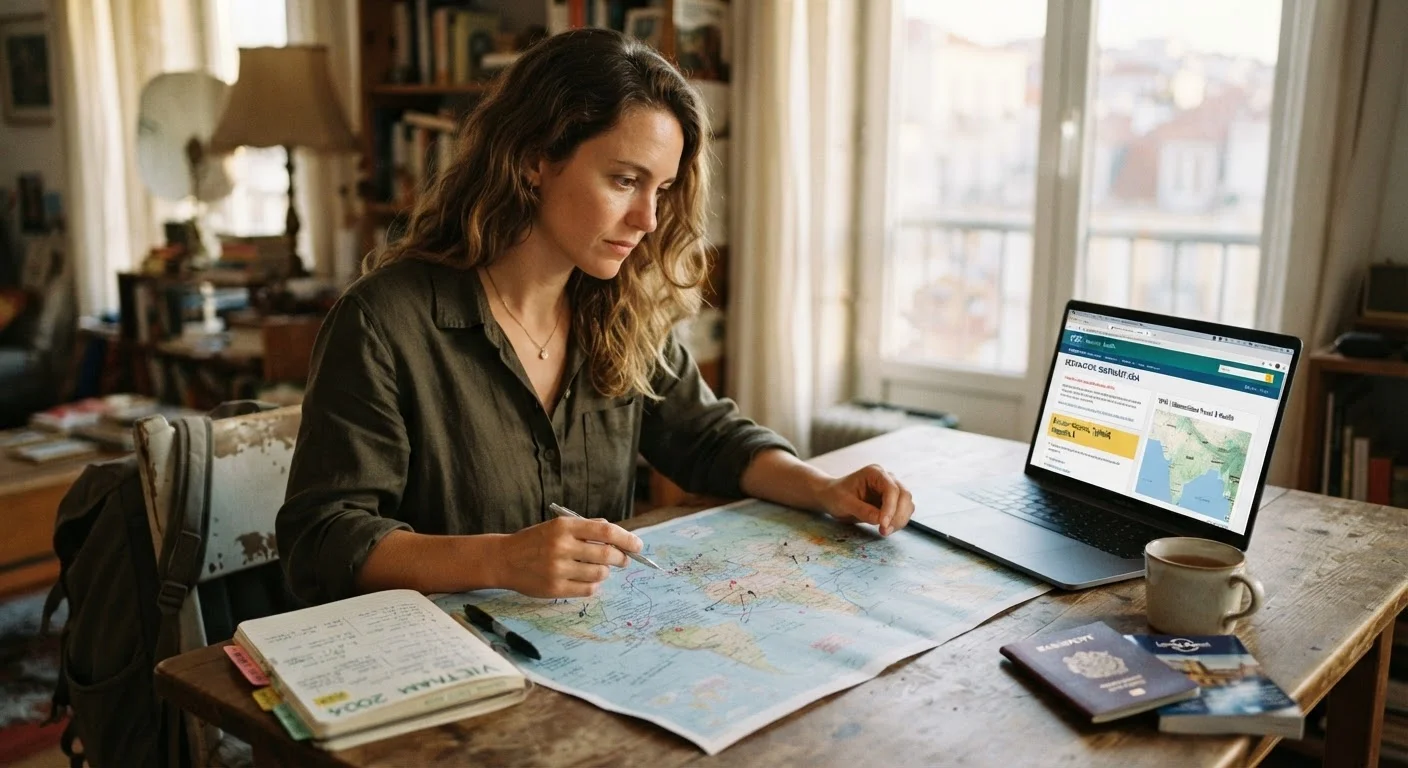
Photo: ResultsExplorer.com | Top Blogs For Everyone editorial
Key Takeaways
- Use official government and WHO sources — not travel blogs — for destination health advisories.
- Some vaccinations require weeks or months to take effect, so start research early.
- Health risks vary by region, season, and trip activities, not just country borders.
- A travel medicine consultation is the most reliable way to get personalized guidance.
- Always verify entry requirements and health rules directly with official sources before booking.
Why Destination Health Research Matters
Most travelers spend more time comparing hotel prices than checking whether their destination carries a risk of malaria, typhoid, or altitude sickness. That gap is where preventable illness happens. Health risks abroad aren't limited to dramatic outbreaks — they include common but serious issues like contaminated water, insect-borne diseases, and climate-related conditions that are routine in certain regions but unfamiliar to US travelers.
The good news: reliable, free resources make this research straightforward. The challenge is knowing which sources to trust and how to interpret what you find. This guide walks you through a practical research process you can complete before you book — or at a minimum, well before you board.
This article provides general health information for educational purposes only. It is not medical advice. Always consult a qualified healthcare provider for guidance specific to your health history and travel plans.
Start Earlier Than You Think
Where to Look: Trusted Official Sources
Start with government and international health agencies. These are the most current and evidence-based resources available to US travelers:
- CDC Travelers' Health (wwwnc.cdc.gov/travel): The US Centers for Disease Control and Prevention maintains destination-specific pages covering recommended and required vaccinations, disease risks, food and water safety notices, and current health notices. This should be your first stop.
- US Department of State Travel Advisories (travel.state.gov): Covers safety and security alongside health considerations. Health-related alerts are often posted here when disease outbreaks affect a destination.
- World Health Organization (who.int): Useful for understanding disease patterns globally and for checking whether outbreaks have been formally declared in a region.
- IAMAT (iamat.org): The International Association for Medical Assistance to Travellers provides free, physician-reviewed travel health charts and a searchable network of vetted doctors abroad.
Avoid relying on travel blogs or social media for health information — they're useful for logistics but not for disease risk. See also our guide on researching a destination meaningfully to round out your pre-trip preparation.
Step-by-Step: How to Research Health Risks
Follow these steps in order. Each one builds on the last and takes roughly 5–15 minutes, depending on the destination.
Look up your destination on the CDC Travelers' Health site
Go to wwwnc.cdc.gov/travel and search by country. Each destination page lists vaccines that are routinely recommended for that country, vaccines required for entry (typically yellow fever), and current health notices such as outbreaks or elevated disease activity. Note everything flagged — you'll bring this list to a medical appointment.
Identify the specific regions and activities in your itinerary
Country-level data is a starting point, not the whole picture. Urban centers, coastal areas, and rural or jungle environments within the same country can carry very different disease risks. Note which specific regions you'll visit and what activities you have planned — trekking, camping, freshwater swimming, and wildlife contact each introduce additional considerations.
Check the travel season and current outbreak status
Many disease risks are seasonal. Malaria transmission peaks during rainy seasons in certain regions; food-borne illness risk can rise in hot months. Check the WHO Disease Outbreak News and the CDC's Travelers' Health notices for any active alerts tied to your travel dates. Make a note of the date you checked — conditions can change.
Review entry health requirements
Some countries require proof of vaccination — most commonly yellow fever — as a condition of entry. These requirements may also apply if you're transiting through a country, not just arriving as your final destination. Check both the CDC destination page and the destination country's official embassy or health ministry website, as requirements can change on short notice.
Compile your findings and consult a travel medicine professional
Bring your destination list, travel dates, planned activities, and any existing health conditions to a travel medicine appointment. This consultation is where general research becomes personalized guidance. A clinician can advise on which vaccines are appropriate for your individual health history, whether antimalarial medication is warranted, and what over-the-counter items to include in a travel health kit.
What to Do with What You Find
Research alone doesn't protect you — action does. Once you've identified the risks relevant to your trip, take the following into account:
- Book a travel medicine appointment: A travel medicine specialist (or your primary care provider) can translate your research into a personalized plan: which vaccines you actually need based on your health history, whether preventive medications are appropriate, and what to pack in a health kit. Schedule this at least 4–8 weeks before departure, as some vaccines require a series or time to build immunity.
- Check your existing immunizations: Routine vaccines like measles-mumps-rubella (MMR) and tetanus are often overlooked. Some destinations heighten the relevance of vaccines you may have received years ago but that have lapsed.
- Factor in your itinerary specifics: A beach resort and a rural village in the same country may carry entirely different risk profiles. Activities like hiking, wildlife contact, or freshwater swimming add additional variables.
For a deeper look at the full preparation process, see our travel health planning guide. If your trip involves significant altitude changes, our article on altitude and your body covers what to watch for. And if you're traveling to a hot climate, protecting yourself from heat and humidity is worth a read before you go.
Media Coverage Doesn't Equal Accurate Risk Assessment
Ongoing Monitoring: Don't Stop at Booking
Health conditions at a destination can change after you book. An outbreak can emerge, a CDC notice can be upgraded, or an entry health requirement can be added. Set a reminder to recheck your destination's CDC page roughly two weeks before departure. The State Department also allows you to enroll in the Smart Traveler Enrollment Program (STEP), which delivers security and health alerts for your destination directly to your inbox — it's free and takes under five minutes to set up.
Once you're on the ground, food and water safety is one of the most common health challenges travelers encounter. Our guide on food and water safety on the road covers the practical habits that reduce your risk of traveler's diarrhea and related illness. When it comes to packing health essentials, consider where those items go — our carry-on vs. checked bag comparison explains why placement matters more than most travelers realize.
The content provided on our blog site traverses numerous categories, offering readers valuable and practical information. Readers can use the editorial team’s research and data to gain more insights into their topics of interest. However, they are requested not to treat the articles as conclusive. The website team cannot be held responsible for differences in data or inaccuracies found across other platforms. Please also note that the site might also miss out on various schemes and offers available that the readers may find more beneficial than the ones we cover.