
Carry-On vs. Checked Bag for Health Essentials: A Practical Comparison

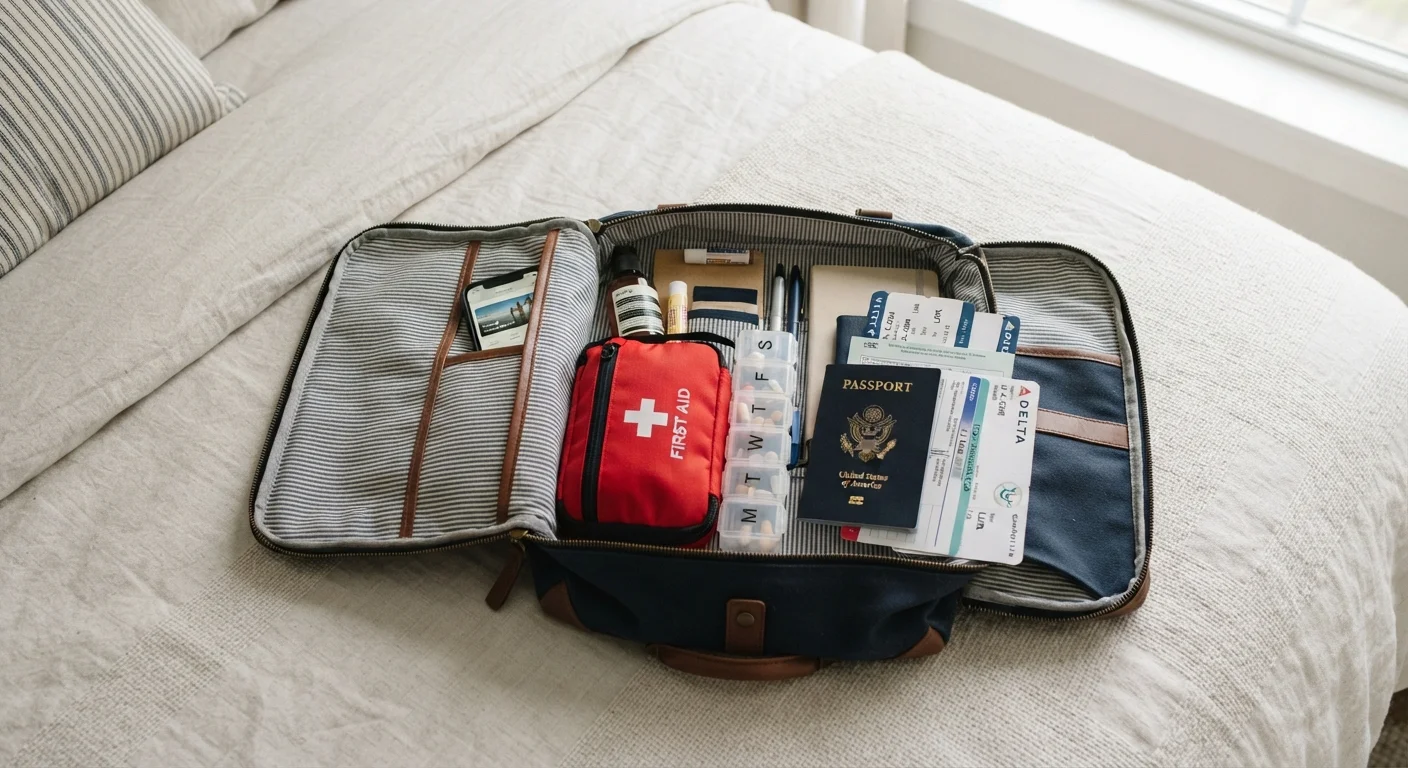
Photo: ResultsExplorer.com | Top Blogs For Everyone editorial
Key Takeaways
- Prescription medications should almost always travel in your carry-on, not your checked bag.
- Checked bags can be delayed, lost, or misrouted — never store irreplaceable health items in them.
- TSA liquid rules apply to carry-on bags; medically necessary liquids are generally exempt with proper documentation.
- Health documents, including insurance cards and doctor's letters, belong in your carry-on for immediate access.
- Bulky or non-urgent wellness supplies — such as extra bandages or equipment backups — can reasonably go in checked luggage.
- Always verify current TSA and airline rules before you fly, as policies can change.
Why Bag Placement Matters More Than Most Travelers Realize
Most travelers think about what to pack for health — but fewer think carefully about where to pack it. The distinction matters more than it might seem. Airlines mishandle or lose a meaningful share of checked bags every year, and when those bags contain medications or health documents, the consequences can range from inconvenient to genuinely dangerous.
The core principle is straightforward: anything you would need urgently — or that cannot easily be replaced at your destination — belongs in your carry-on. Everything else can be evaluated case by case. Before your next departure, our pre-departure checklist can help you audit exactly what health items you're carrying and where they should go.
| Criterion | Carry-On Bag | Checked Bag |
|---|---|---|
| Access during flight | Immediate, anytime | None until arrival |
| Risk if bag is lost or delayed | Low — stays with you | High — bag may not arrive |
| Liquid volume rules | TSA limits apply (exemptions for medical liquids) | No TSA liquid restrictions |
| Best for prescription medications | Yes — strongly recommended | No — too risky |
| Best for bulky supplies | Limited by size/weight | Yes — more space available |
| Health documents | Yes — keep accessible | No — need immediate access |
| Emergency medications | Always carry-on | Never appropriate |
| Non-urgent OTC extras | Possible but wastes space | Reasonable choice |
What Should Always Go in Your Carry-On
The carry-on is your safety net. Once a checked bag leaves the check-in counter, you have no control over it until (hopefully) it arrives at baggage claim. These categories should consistently travel with you in the cabin:
- Prescription medications: Keep them in original, labeled containers when possible. If you take daily medications, running out mid-trip because your bag was delayed is a serious risk. For more detail on cross-border rules, see our guide on traveling with medications.
- Emergency medications: Epinephrine auto-injectors, nitroglycerin, inhalers, and similar items must be immediately accessible — not buried in a bag in the cargo hold.
- Health and insurance documents: Travel insurance cards, vaccination records, and any doctor's letter explaining your medical needs belong in your carry-on. These may be requested at borders, clinics, or pharmacies.
- Medical devices in active use: Hearing aids, glucose monitors, and similar devices should travel with you.
TSA Rules for Medical Items
Medically necessary liquids — including liquid medications and IV supplies — are generally allowed through TSA security in carry-ons beyond the standard 3.4 oz limit, but they must be declared at the checkpoint. Always check the TSA website directly before you fly for the most current guidance.
What Can Reasonably Go in a Checked Bag
Checked bags aren't off-limits for health supplies — they're just the wrong home for anything urgent or irreplaceable. Items that can safely travel in checked luggage include:
- Backup or overflow supplies: A second week's worth of vitamins, extra bandages, or a spare pair of glasses (assuming your primary pair travels with you) are reasonable checked-bag candidates.
- Bulky medical equipment: CPAP machines and their accessories are a common example. Many travelers carry the device itself in the cabin but pack extra tubing or filters in checked luggage.
- Non-urgent OTC items: Large bottles of sunscreen, antacids, or cold medicine that you won't need in-flight or immediately on arrival can go in your checked bag — just don't rely on them being there on day one.
Building a compact, well-organized first aid kit is a useful starting point. Our guide to assembling a traveler's first aid kit walks through what to include without overpacking.
~6 per 1,000
Checked bags mishandled per passengers boarded
According to the U.S. Department of Transportation Air Travel Consumer Report, U.S. airlines reported roughly 6 mishandled bags per 1,000 passengers in recent reporting periods — underscoring why irreplaceable items shouldn't be checked.
Up to 5 days
Typical wait for a delayed bag to be returned
Industry data suggests delayed bags can take anywhere from a few hours to several days to be returned to passengers, depending on the route and airline — a serious problem if medications are inside.
Planning Your Health Packing Strategy
The smartest approach is a deliberate split: carry-on holds anything time-sensitive or irreplaceable; checked bag handles bulk and backup. A few practical steps make this easier to execute:
- List every health item you're bringing and mark each as "urgent/irreplaceable" or "backup/non-urgent."
- For prescription medications, carry a copy of the prescription or a letter from your prescribing provider — especially important for international travel.
- If you use a medical device, check the airline's specific policies in advance, as some devices require notification before boarding.
- Consider packing a small, clearly labeled medical pouch inside your carry-on so items are easy to find at security or in a medical situation.
If you haven't already reviewed your health preparation more broadly, the travel health planning guide covers vaccinations, prescriptions, and pre-trip health steps worth addressing well before departure. Travelers heading somewhere with specific disease or health risks should also consult our resource on researching destination health risks before they book.
This article provides general travel information only and does not constitute medical or legal advice. Always consult a qualified healthcare provider regarding your specific medications and health needs before travel, and verify current airline and TSA policies directly with those authorities before your flight.
The content provided on our blog site traverses numerous categories, offering readers valuable and practical information. Readers can use the editorial team’s research and data to gain more insights into their topics of interest. However, they are requested not to treat the articles as conclusive. The website team cannot be held responsible for differences in data or inaccuracies found across other platforms. Please also note that the site might also miss out on various schemes and offers available that the readers may find more beneficial than the ones we cover.