
The Traveler's First Aid Kit: What Belongs Inside

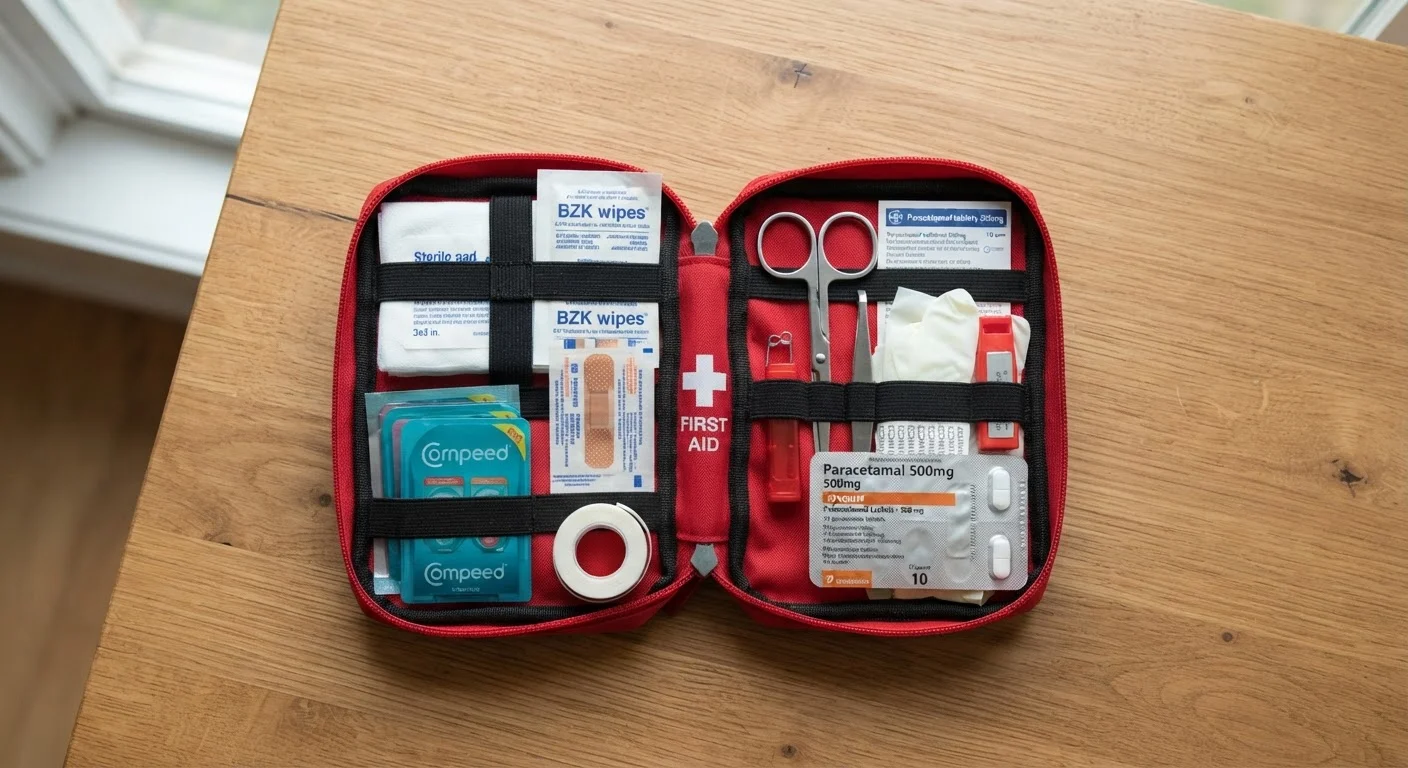
Photo: ResultsExplorer.com | Top Blogs For Everyone editorial
Why a Dedicated Travel Kit Makes Sense
A minor cut, a headache at altitude, a blister on mile three of a cobblestone walking tour — these aren't emergencies, but they can derail a trip if you're unprepared. A travel-specific first aid kit keeps the supplies you're most likely to need within arm's reach, without duplicating your entire medicine cabinet.
The goal isn't to prepare for every conceivable scenario. It's to handle common, low-stakes issues yourself and to stabilize anything more serious until you can reach local medical care. For broader pre-trip health preparation, see Travel Health Planning: What to Do Before You Leave Home before you pack.
| Recommended kit weight | Under 1 lb (approx. 400g) (General traveler consensus; varies by trip length) |
| Most common travel ailment | Traveler's diarrhea (CDC Travelers' Health guidance) |
| Carry-on or checked bag | Always carry-on for medications and key supplies (TSA and general travel health recommendations) |
| Kit review frequency | Before every trip — check expiration dates |
| Blister risk factor | New or stiff footwear on long walking days (Common podiatric and travel medicine guidance) |
Core Supplies: The Non-Negotiables
These items cover the vast majority of travel health incidents and should be in every kit regardless of destination:
- Adhesive bandages — multiple sizes, including fingertip and knuckle cuts
- Sterile gauze pads and medical tape — for larger wounds or securing a dressing
- Antiseptic wipes or solution — to clean cuts and scrapes before dressing
- Blister treatment — moleskin or hydrocolloid blister pads are especially useful for walking-heavy trips
- Pain reliever / fever reducer — such as acetaminophen or ibuprofen; follow standard package dosing instructions
- Antihistamine — helpful for mild allergic reactions, insect bites, or hay fever flare-ups
- Antidiarrheal medication — traveler's diarrhea is among the most common travel illnesses; pair this with good food and water habits covered in Food and Water Safety on the Road
- Oral rehydration salts (ORS) — compact packets that restore electrolytes lost to vomiting or diarrhea
- Tweezers — for splinters or tick removal
- Medical-grade gloves — at least one pair, for safe wound handling
Oral Rehydration Salts (ORS)
A mixture of salts and sugar dissolved in water, designed to replace electrolytes and fluids lost during diarrhea or vomiting. ORS packets are compact, inexpensive, and widely recommended by travel medicine professionals.
Hydrocolloid dressing
A type of wound dressing that absorbs fluid from a blister or abrasion while creating a moist healing environment. Often sold as blister pads, they adhere well and reduce friction.
Antihistamine
A class of medication that counters the effects of histamine, the chemical involved in allergic reactions. Commonly used for mild allergies, insect bites, hives, or hay fever; some types also cause drowsiness.
TSA 3-1-1 Rule
A U.S. Transportation Security Administration policy requiring that carry-on liquids be in containers of 3.4 oz (100ml) or less, all fitting in one quart-sized clear bag, with one bag per passenger. Medications may be exempt but should be declared separately.
Destination-Specific and Personal Additions
Once you've assembled the core kit, consider what your specific trip demands:
- Sun protection items — high-SPF sunscreen and aloe vera gel for sunburn relief if traveling to sunny or high-altitude destinations
- Insect repellent wipes — compact and TSA-friendly
- Motion sickness relief — particularly useful for cruises, winding mountain roads, or small aircraft
- Altitude sickness support — if trekking above 8,000 feet, discuss options with a healthcare provider before departure
- Prescription medications — carry all personal prescriptions in original labeled containers. Review packing and declaration requirements in Traveling with Medications before you fly
- Contact lens supplies — solution, a spare case, and glasses as backup
If you're heading somewhere remote or with limited pharmacy access — such as rural areas or some destinations covered in A First-Timer's Introduction to Travelling in the Middle East — consider slightly expanding your wound care and rehydration supplies.
This article provides general health information for educational purposes only and is not medical advice. Consult a qualified healthcare professional before traveling, particularly regarding medications, vaccinations, or personal health conditions.
Packing and Carrying Your Kit Smartly
Compact, durable, and accessible — those are the three qualities a travel first aid kit needs. A small zipper pouch or rigid-shell case works well. Label it clearly so anyone helping you in an emergency can find it quickly.
Keep the kit in your carry-on, not your checked bag. If your luggage is delayed, you still want access to medications and basic supplies. For more guidance on this decision, Carry-On vs. Checked Bag for Health Essentials lays out the considerations clearly.
Check quantities before each trip and replace anything expired or used. Liquids like antiseptic solution should comply with TSA's 3-1-1 carry-on rules if flying domestically, or the equivalent rules of the airline and country for international travel. When in doubt, opt for wipe packets or dry formats instead. For a broader look at trip logistics that are easy to overlook, Lesser-Known Logistics That Catch First-Time International Travellers Off Guard is worth a read before any international departure.
The content provided on our blog site traverses numerous categories, offering readers valuable and practical information. Readers can use the editorial team’s research and data to gain more insights into their topics of interest. However, they are requested not to treat the articles as conclusive. The website team cannot be held responsible for differences in data or inaccuracies found across other platforms. Please also note that the site might also miss out on various schemes and offers available that the readers may find more beneficial than the ones we cover.