
Traveling with Medications: Declarations, Storage, and Local Rules

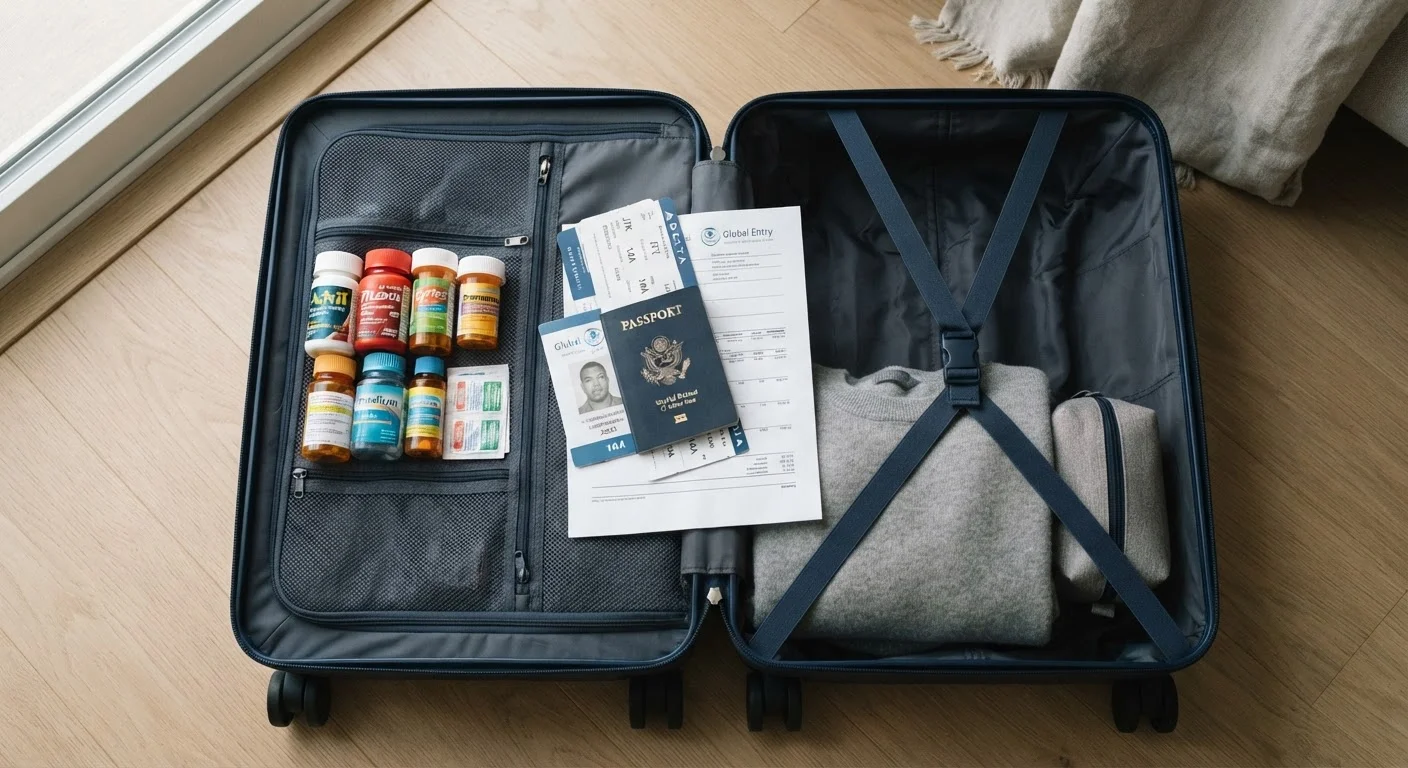
Photo: ResultsExplorer.com | Top Blogs For Everyone editorial
Why Medication Rules at the Border Matter
Carrying medications across international borders is not simply a matter of packing what you need. Every country has its own rules about which substances are permitted, which require prior authorization, and which are outright banned — regardless of whether they are legally prescribed in the United States. Customs officers have legal authority to inspect your medications, and travelers who are unprepared can face delays, confiscation, or in serious cases, legal consequences.
This is not meant to alarm — millions of travelers carry medications internationally every year without incident. But being informed and organized before departure makes that experience far smoother. See our travel health planning guide for a broader look at pre-trip health preparation.
| Declaration requirement | Most countries require declaring controlled substances at customs; when in doubt, declare (U.S. Customs and Border Protection (CBP)) |
| Recommended documentation | Original pharmacy label + physician letter on official letterhead |
| Typical personal-use supply limit | 30–90 days depending on destination and substance (Varies by country) |
| TSA liquid medication rule | Medically necessary liquids exempt from 3.4 oz limit; declare at security (TSA.gov) |
| Countries with notably strict rules | Japan, Indonesia, UAE, Singapore among frequently cited examples (Consult each country's embassy for current rules) |
| Best place to verify entry rules | Destination country's official embassy or health authority website |
Declarations: What You Must Report
Most countries require travelers to declare medications that contain controlled substances — including many common prescriptions for pain, anxiety, ADHD, and sleep. The U.S. Customs and Border Protection (CBP) requires travelers entering the United States to declare all medications. When traveling outbound, the destination country's requirements are what matter most.
General declaration principles to follow:
- Declare any medication you are uncertain about — underdeclaring carries more risk than overdeclaring.
- Carry a letter from your prescribing physician on official letterhead, stating the diagnosis, medication name, dosage, and that it is for personal use.
- Keep medications in their original, pharmacy-labeled containers whenever possible.
- For controlled substances (such as opioids, benzodiazepines, or stimulants), research whether the destination country requires advance import permits. Some countries — Japan and Indonesia are frequently cited examples — have particularly strict rules about substances legal elsewhere.
Travelers should verify requirements directly with the embassy or official health authority of each destination country before travel. Rules change, and general summaries online may not reflect the current situation.
Controlled Substance Rules Vary Widely by Country
Storage: Protecting Medications in Transit
How you store medications during travel affects both their effectiveness and your access to them if something goes wrong. Checked baggage can be lost, delayed, or exposed to temperature extremes in cargo holds — all of which argue for keeping essential medications in your carry-on bag. See our comparison of carry-on vs. checked bag for health essentials for a fuller breakdown.
Storage considerations by medication type:
- Temperature-sensitive medications (such as insulin and certain biologics): Require insulated cases and, for longer trips, may need refrigeration on arrival. Airlines and accommodations can often assist when notified in advance.
- Liquid medications: TSA allows medically necessary liquids in carry-on bags beyond the standard 3.4 oz limit, but you should declare them at the security checkpoint. Verification of the TSA's current policy directly on their official website is always advisable.
- Over-the-counter medications: Even familiar remedies like certain antihistamines or cold medicines may be restricted or require labeling in the destination country. Check before you pack them.
For all medications: pack a modest supply buffer — enough for a few extra days beyond your trip — to accommodate unexpected delays. Do not rely on being able to purchase exact equivalents abroad; formulations, brand names, and availability vary considerably by country.
Local Rules: What Changes When You Land
Once you arrive, local regulations may affect how you store, carry, and use your medications day-to-day. Some countries restrict carrying controlled substances in public without documentation on your person. Others limit how many days' supply can be imported at one time — common limits range from 30 to 90 days, depending on the substance and destination.
A few practical steps that experienced travelers use:
- Research each destination individually, especially for multi-country itineraries. Rules in one country do not carry over to the next.
- Contact the destination country's embassy in the U.S. well before travel for authoritative guidance on controlled substances.
- Keep copies of all documentation — prescriptions, physician letters, and any import permits — in both digital and physical formats.
- Understand disposal rules: some countries prohibit discarding certain medications in regular trash or have specific return programs.
Thorough pre-departure research is the most effective safeguard. Our pre-departure checklist includes a health-documentation review step worth building into your routine. You may also find it useful to review lesser-known international travel logistics that frequently catch unprepared travelers off guard.
Controlled substance
A drug or chemical regulated by government law due to its potential for abuse or dependency. What qualifies as controlled varies significantly by country, and a medication legal in the U.S. may be restricted or banned elsewhere.
Import permit
An advance authorization required by some countries before a traveler may bring certain medications across the border. Obtaining one typically involves submitting a physician letter and official forms to the destination country's health authority prior to travel.
Customs declaration
A formal process at border entry in which travelers disclose items — including medications — that may be subject to regulation. Failing to declare required items can result in confiscation, fines, or detention.
Personal use supply
The quantity of medication a traveler is permitted to import for their own use, as distinct from commercial quantities. Many countries set explicit day-supply limits — often 30 to 90 days — for imported medications.
Temperature-sensitive medication
Any medication that requires storage within a specific temperature range to remain effective and safe. Insulin and certain biologics are common examples; exposure to heat, cold, or light during transit can degrade them.
This article is for general informational purposes only and does not constitute medical, legal, or regulatory advice. Medication regulations vary by country and are subject to change. Always verify requirements with official government sources and consult a qualified healthcare professional before traveling with prescription or controlled medications.
The content provided on our blog site traverses numerous categories, offering readers valuable and practical information. Readers can use the editorial team’s research and data to gain more insights into their topics of interest. However, they are requested not to treat the articles as conclusive. The website team cannot be held responsible for differences in data or inaccuracies found across other platforms. Please also note that the site might also miss out on various schemes and offers available that the readers may find more beneficial than the ones we cover.