
Pre-Departure Checklist: What to Confirm in the Week Before You Leave

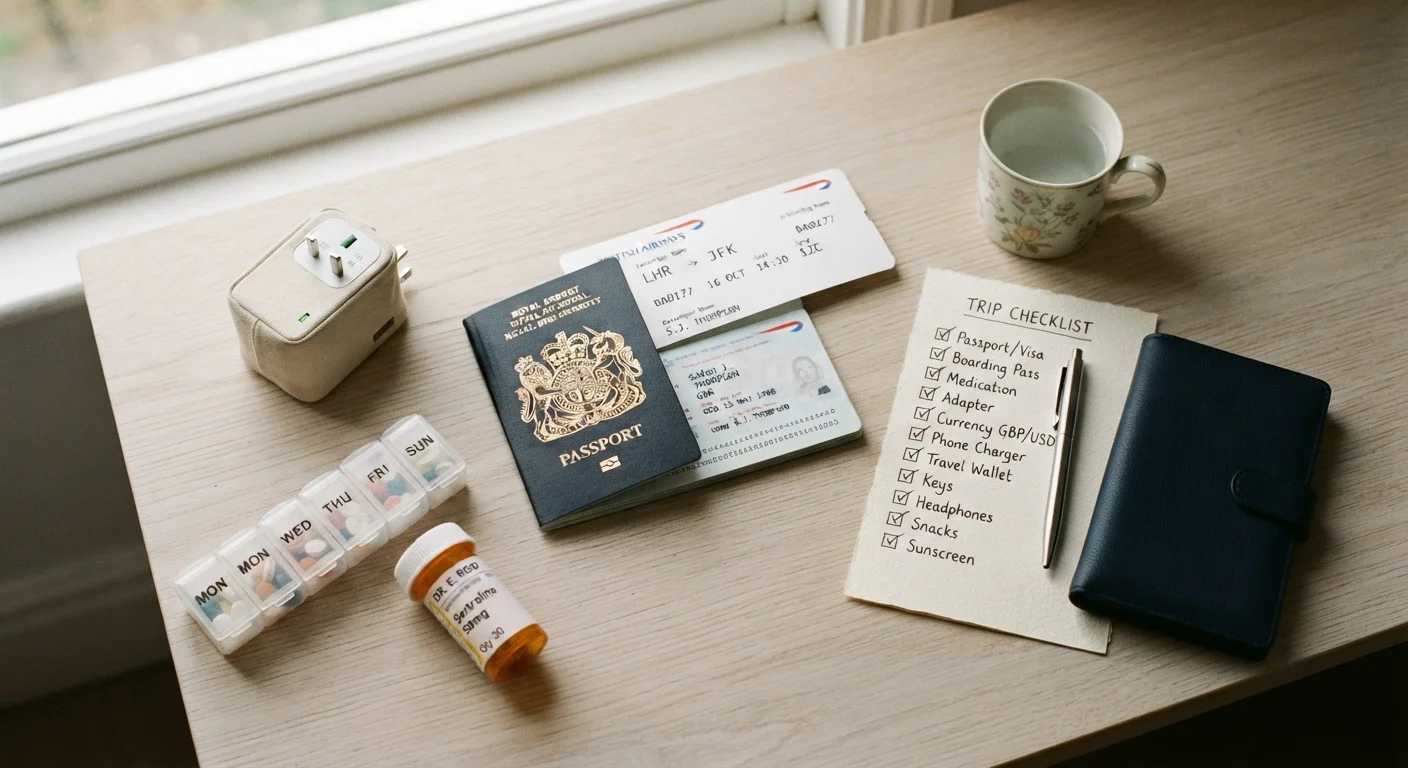
Photo: ResultsExplorer.com | Top Blogs For Everyone editorial
Key Takeaways
- Confirm passport validity and visa requirements at least seven days before departure.
- Notify your bank and review travel insurance coverage before you fly.
- Secure your home, arrange pet care, and pause recurring services ahead of time.
- Check health requirements—vaccinations, prescriptions, and medication rules—for your destination.
- Download offline maps, save emergency contacts, and back up key documents digitally.
Why the Week Before Departure Is the Right Time
Most travel stress traces back to tasks that could have been handled days earlier but were left for the morning of departure. The week before you leave is your last realistic window to fix problems without paying premium prices or scrambling at the airport.
This checklist is organized into four practical categories: documents and entry requirements, reservations and finances, home preparation, and health. Work through each group on separate days rather than all at once — that pacing lets you resolve any issues that surface without panic.
If this is your first international trip, also review lesser-known international logistics that many first-timers overlook, such as transit visa rules and airport transfer requirements.
Documents & Entry Requirements
Reservations & Finances
Home & Pet Preparation
Health & Safety Prep
Documents, Entry Requirements, and Finances
Entry and money problems are the two categories most likely to derail a trip entirely — and both are fully preventable with a week's notice.
Check your passport expiration date carefully. Many countries require at least six months of validity beyond your travel dates, and some airlines will deny boarding if that threshold isn't met. If your passport is cutting it close, contact your local passport agency immediately; standard processing times will not help you at this point.
Visa requirements vary widely by destination and by your citizenship. Always verify current rules through your government's official travel advisory site rather than third-party aggregators, which can lag behind policy changes. Entry rules for health documentation — such as proof of vaccination — also change; confirm these directly with the destination country's embassy or official tourism authority.
Don't Rely on Third-Party Visa Information
On the financial side, notify your bank and any credit card issuers about your travel dates and destinations. A flagged transaction on day one of your trip is a fixable inconvenience at home; abroad, it can leave you without access to funds. Also confirm that your travel insurance policy covers your actual itinerary — destination, trip length, and planned activities. Review what's excluded, not just what's covered.
Reservations, Home Prep, and Health
Confirm every reservation in this order: flights, accommodation, and any pre-booked transfers or tours. Don't just check that confirmations exist — log in to each provider's site or app, verify the dates and passenger names are correct, and save or screenshot the booking references. Airline seat assignments and meal preferences can quietly reset after schedule changes.
For home security, arrange a trusted contact who can check in or hold a spare key. Pause mail and newspaper delivery if you'll be away more than a few days. Set lights on timers. If you have pets, confirm care arrangements are firmly in place — not just verbally agreed — and leave your vet's contact details and any medication instructions in writing. Our vet visit checklist can help you document what a sitter or boarding facility needs to know.
Health preparation deserves its own focused pass. Confirm that any required or recommended vaccinations for your destination are up to date — some require a lead time of several weeks, so this is genuinely a last-chance check rather than something you can act on at the gate. If you carry prescription medications, verify you have enough supply for the full trip plus buffer days, and review how to transport and declare them correctly. The rules vary significantly by country; see our guidance on traveling with medications across borders for a detailed breakdown.
Medication Rules Vary Significantly by Country
Finally, handle your digital prep: download offline maps for your destination, save embassy contact numbers, photograph the front and back of key documents, and store copies in a secure cloud folder or email them to yourself. Knowing where to pack health items is also worth considering — our piece on carry-on versus checked bag for health essentials covers what belongs where. Before you travel, it's also worth investing time in pre-departure cultural research so you arrive informed about local customs and expectations.
This article is for general informational purposes only and does not constitute medical, legal, or financial advice. Always verify entry requirements, health documentation, and insurance coverage with official government sources and licensed professionals before traveling.
The content provided on our blog site traverses numerous categories, offering readers valuable and practical information. Readers can use the editorial team’s research and data to gain more insights into their topics of interest. However, they are requested not to treat the articles as conclusive. The website team cannot be held responsible for differences in data or inaccuracies found across other platforms. Please also note that the site might also miss out on various schemes and offers available that the readers may find more beneficial than the ones we cover.