
Neutering a Dog: The Arguments For, Against, and In Between

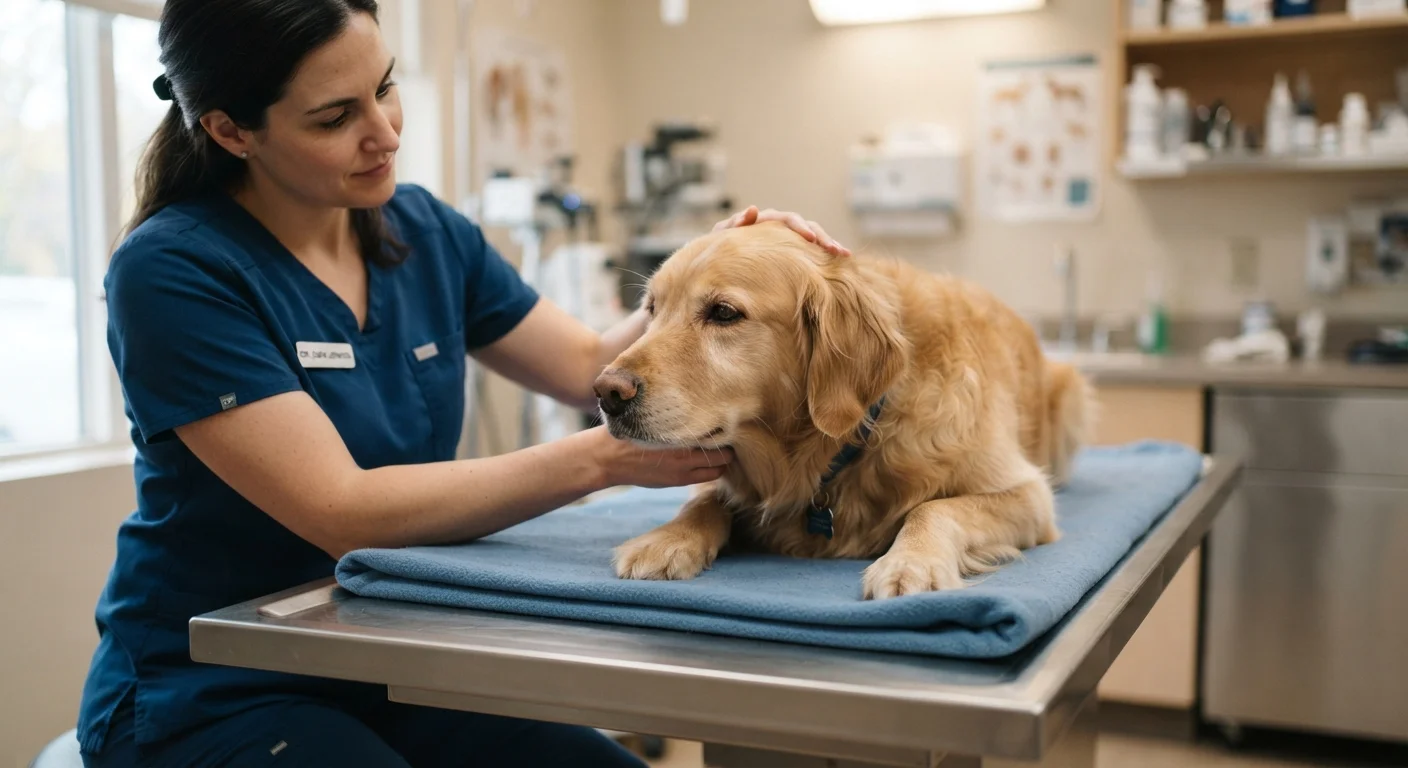
Photo: ResultsExplorer.com | Top Blogs For Everyone editorial
Key Takeaways
- Neutering eliminates certain reproductive cancers but may raise risk for others depending on breed and timing.
- Behavioural changes after neutering are real but often overstated — training matters more than hormones.
- Emerging research suggests timing relative to a dog's physical maturity is a critical variable.
- Population control remains a strong public health argument in favour of the procedure.
- Always discuss your individual dog's breed, size, and health history with a veterinarian before deciding.
Eliminates testicular cancer risk entirely
Neutering removes the testicles, making testicular cancer biologically impossible. This is one of the clearest and most direct health benefits of the procedure.
Significantly reduces benign prostatic hyperplasia
The majority of intact male dogs develop some degree of prostate enlargement with age. Neutering dramatically reduces this risk and the associated urinary and defecation difficulties.
Prevents unplanned litters and reduces shelter intake
Intact males can travel considerable distances to reach females in heat, contributing to unplanned pregnancies. Neutering removes this reproductive drive entirely.
May reduce certain hormonally driven behaviours
Roaming, urine marking, and mounting behaviour are all influenced by testosterone. Neutering often reduces these behaviours, though the effect varies and training remains essential.
Reduces risk of perineal hernias and perianal tumours
Both conditions are strongly associated with testosterone exposure in intact males; neutering substantially lowers their likelihood, according to veterinary literature.
Possible increased risk of certain orthopaedic conditions
Research, particularly in large breeds, has associated early neutering with higher rates of hip dysplasia and cruciate ligament injury, likely due to altered bone growth plate development.
Potential links to some cancers in specific breeds
Several studies have found elevated rates of hemangiosarcoma, lymphoma, and mast cell tumours in neutered dogs of certain breeds, though this relationship is complex and not fully understood.
Permanent, irreversible procedure
Unlike some medical interventions, neutering cannot be undone. If evidence continues to evolve, owners of already-neutered dogs cannot benefit retroactively from updated guidance.
May contribute to weight gain if diet is unmanaged
Testosterone influences metabolism, and neutered dogs may have modestly reduced caloric needs. Without dietary adjustment, weight gain and associated health problems are a real risk.
Behavioural improvements are not guaranteed
Aggression rooted in fear, resource guarding, or learned behaviour is unlikely to change significantly with neutering. Owners should not rely on the procedure as a behavioural fix.
What Neutering Actually Involves
Neutering — referred to medically as orchiectomy — is the surgical removal of a male dog's testicles. It permanently eliminates the primary source of testosterone in the body. The procedure is routine, typically performed under general anaesthesia, and most dogs recover within one to two weeks. For a comparison with how the equivalent procedures differ in cats, see spaying and neutering cats.
Because testosterone drives a wide range of physiological processes — from bone density to behaviour — its permanent removal has effects across multiple body systems. This is why the debate around neutering has grown more nuanced as veterinary research has expanded beyond population control into long-term health outcomes.
The Case For Neutering
Eliminates testicular cancer risk entirely
Neutering removes the testicles, making testicular cancer biologically impossible. This is one of the clearest and most direct health benefits of the procedure.
Significantly reduces benign prostatic hyperplasia
The majority of intact male dogs develop some degree of prostate enlargement with age. Neutering dramatically reduces this risk and the associated urinary and defecation difficulties.
Prevents unplanned litters and reduces shelter intake
Intact males can travel considerable distances to reach females in heat, contributing to unplanned pregnancies. Neutering removes this reproductive drive entirely.
May reduce certain hormonally driven behaviours
Roaming, urine marking, and mounting behaviour are all influenced by testosterone. Neutering often reduces these behaviours, though the effect varies and training remains essential.
Reduces risk of perineal hernias and perianal tumours
Both conditions are strongly associated with testosterone exposure in intact males; neutering substantially lowers their likelihood, according to veterinary literature.
The population control argument is well-established. Millions of dogs enter shelters annually in the United States, and intact males contribute to unplanned litters when they roam. Neutering also eliminates the risk of testicular cancer entirely and significantly reduces the likelihood of benign prostatic hyperplasia — a condition affecting the majority of intact older male dogs.
From a management standpoint, neutered dogs are less likely to mark indoors, mount persistently, or attempt to escape in search of mates. These are meaningful quality-of-life improvements for many households. It's worth noting, however, that these behaviours are also addressable through reward-based training, regardless of neuter status.
The Case Against — or For Waiting
Possible increased risk of certain orthopaedic conditions
Research, particularly in large breeds, has associated early neutering with higher rates of hip dysplasia and cruciate ligament injury, likely due to altered bone growth plate development.
Potential links to some cancers in specific breeds
Several studies have found elevated rates of hemangiosarcoma, lymphoma, and mast cell tumours in neutered dogs of certain breeds, though this relationship is complex and not fully understood.
Permanent, irreversible procedure
Unlike some medical interventions, neutering cannot be undone. If evidence continues to evolve, owners of already-neutered dogs cannot benefit retroactively from updated guidance.
May contribute to weight gain if diet is unmanaged
Testosterone influences metabolism, and neutered dogs may have modestly reduced caloric needs. Without dietary adjustment, weight gain and associated health problems are a real risk.
Behavioural improvements are not guaranteed
Aggression rooted in fear, resource guarding, or learned behaviour is unlikely to change significantly with neutering. Owners should not rely on the procedure as a behavioural fix.
A growing body of research, including studies from the University of California, Davis, has found associations between early neutering and elevated risk of certain joint disorders — including hip dysplasia and cranial cruciate ligament tears — particularly in large and giant breeds. Some studies also suggest links to certain cancers, including hemangiosarcoma and mast cell tumours, though the evidence varies by breed and study design.
The mechanism likely relates to the role sex hormones play in musculoskeletal development. Removing testosterone before a dog reaches physical maturity may alter growth plate closure and affect long-term joint integrity. This has led many veterinary professionals to recommend delaying neutering in large-breed dogs until 12–24 months of age, rather than the traditional 6-month window. Owners of ageing dogs managing related health changes may find additional context in our guide to senior dog care.
What the Research Actually Shows
Breed and Size Change the Equation
The science here is genuinely unsettled, and that matters. Many earlier studies had methodological limitations — small sample sizes, owner-reported data, and failure to control for confounding variables like diet and exercise. More recent, larger studies have refined the picture considerably, but breed-specific data remains incomplete for many less common breeds.
What is broadly agreed upon: the risks and benefits of neutering are not uniform across all dogs. A Labrador Retriever, a Chihuahua, and a Belgian Malinois face meaningfully different risk profiles. Claims that neutering is universally beneficial — or universally harmful — do not reflect the current state of veterinary science. Readers interested in how health myths persist in this space may find our piece on common dog health myths a useful companion read.
Making the Decision With Your Vet
~80%
Intact male dogs developing prostatic changes with age
Veterinary sources broadly estimate that the majority of unneutered male dogs develop benign prostatic hyperplasia by middle to old age.
4–5x
Elevated joint disorder risk in early-neutered large breeds
A University of California, Davis study found several-fold increases in certain joint disorders in Golden Retrievers neutered before 12 months compared to intact dogs.
A productive conversation with your veterinarian should account for your dog's breed and projected adult size, current age, living situation, and any relevant family health history if known from the breeder. For owners of large or giant breeds, asking specifically about timing — rather than simply whether to neuter — is the most important question to raise.
This is a decision with permanent consequences, and general information — including this article — cannot substitute for professional guidance tailored to your individual dog. There is no universally correct answer, but there is a best answer for your specific animal, and your veterinarian is the right person to help you find it.
This article is for general informational purposes only and does not constitute veterinary medical advice. Always consult a licensed veterinarian before making health decisions for your pet.
The content provided on our blog site traverses numerous categories, offering readers valuable and practical information. Readers can use the editorial team’s research and data to gain more insights into their topics of interest. However, they are requested not to treat the articles as conclusive. The website team cannot be held responsible for differences in data or inaccuracies found across other platforms. Please also note that the site might also miss out on various schemes and offers available that the readers may find more beneficial than the ones we cover.