
Rabbit Housing: What Your Bunny Actually Needs to Thrive

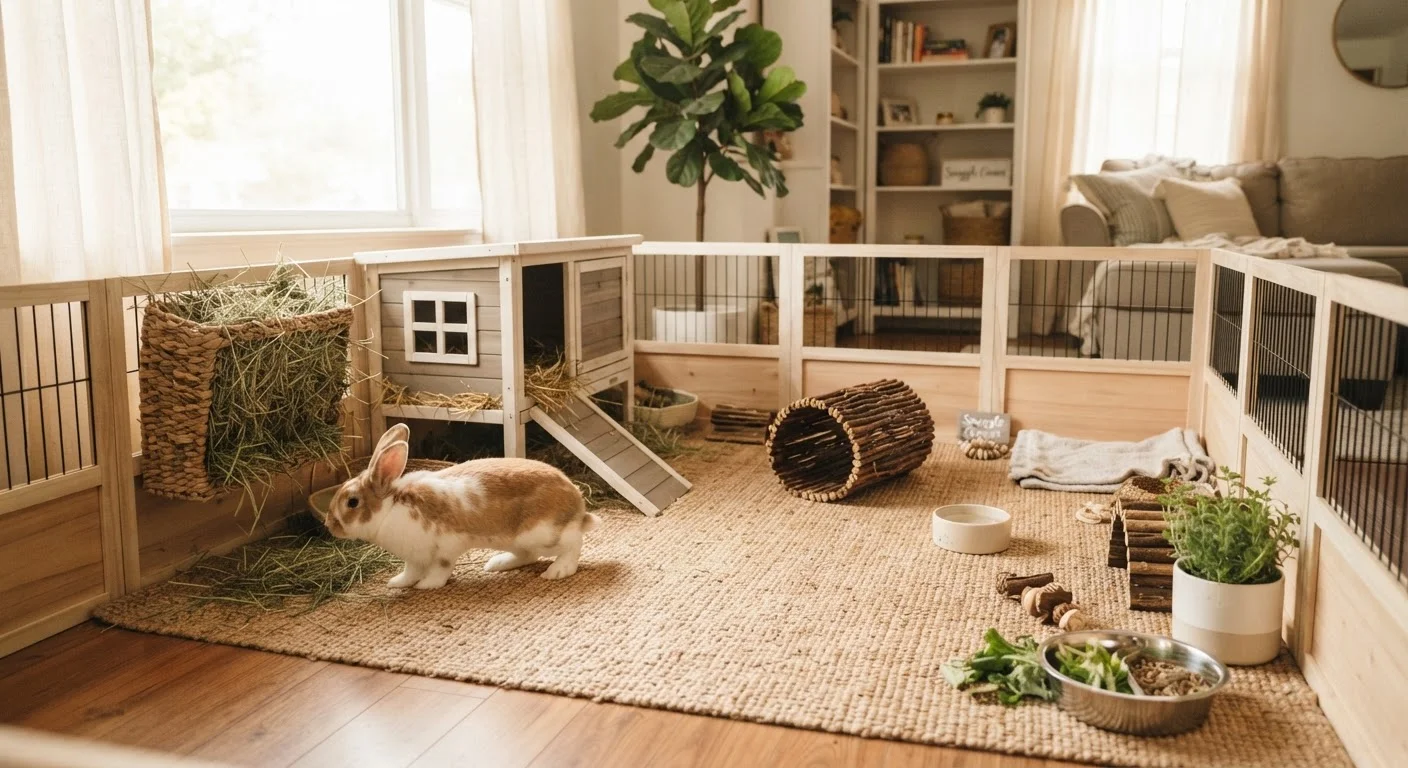
Photo: ResultsExplorer.com | Top Blogs For Everyone editorial
Key Takeaways
- Rabbits need far more living space than traditional small-pet cages typically provide.
- Solid, non-slip flooring is essential to prevent painful foot conditions like sore hocks.
- Daily exercise outside the enclosure is a non-negotiable part of rabbit welfare.
- Environmental enrichment — tunnels, hides, and foraging opportunities — is critical for mental health.
- Indoor and outdoor housing both carry distinct welfare trade-offs worth carefully considering.
- A bonded companion rabbit significantly improves overall well-being for most domestic bunnies.
Why Standard Cages Fall Short
The small wire cages commonly sold as "starter kits" in pet stores rarely meet the space requirements of a healthy rabbit. A rabbit confined to an undersized enclosure cannot express natural behaviors — running, binkying (the joyful mid-air twist rabbits perform when happy), or simply stretching out fully. Chronic confinement is linked to muscle atrophy, obesity, and behavioral problems including repetitive circling and bar-chewing.
The enclosure should be viewed as a home base, not the rabbit's entire world. At minimum, the living space should allow three to four unrestricted hops in length and full upright posture without the ears touching the ceiling. Exercise runs, rabbit-proofed rooms, or large pens that attach to the enclosure extend usable space significantly. Before committing to a setup, the small pet readiness checklist can help you evaluate whether your home is genuinely prepared for a rabbit's spatial needs.
8 ft × 4 ft
Recommended minimum enclosure footprint
Rabbit welfare organizations including the Rabbit Welfare Association & Fund cite this as a general starting minimum for a single average-sized rabbit, separate from daily exercise space.
3–4 hours
Minimum daily free-roam exercise
Many rabbit care guidelines recommend at least 3–4 hours of unsupervised or supervised exercise outside the primary enclosure each day.
~10 years
Average domestic rabbit lifespan
Well-housed, neutered indoor rabbits commonly live 8–12 years, underscoring the long-term commitment that appropriate housing represents.
Flooring, Substrate, and Sleeping Areas
Flooring is one of the most consequential housing decisions a rabbit owner makes. Wire mesh floors — still present in many commercially sold hutches — concentrate pressure on the metatarsal bones and hairless heel pads of a rabbit's hind feet, leading to sore hocks: painful, ulcerated lesions that can become infected. Solid flooring is the foundation of a safe enclosure.
Appropriate substrate options include:
- Compressed paper or cardboard-based litter in litter boxes — absorbent and low in respiratory irritants
- Fleece or cotton mats over hard floors — washable and gentle on feet
- Seagrass or sisal mats — satisfying to dig at and safe if nibbled in small amounts
- Hay — doubles as substrate, foraging material, and the dietary cornerstone rabbits need unlimited access to
A dedicated sleeping area — a wooden hide, enclosed box, or tunnel with soft bedding inside — gives the rabbit a sense of security. Rabbits are prey animals; the ability to retreat to a covered space reduces chronic stress significantly.
Litter Training Simplifies Hygiene
Exercise and Free-Roam Time
No enclosure, however well-appointed, replaces free movement. Rabbits should have access to a substantially larger exercise area for a minimum of several hours each day — and ideally, much of the day. Rabbits left in enclosures around the clock without adequate exercise develop physical and behavioral health problems at a markedly higher rate.
Indoor free-roam setups require rabbit-proofing: covering or concealing electrical cables, blocking gaps behind furniture, and removing toxic houseplants. Outdoor exercise runs must be fully enclosed on all sides and the top to prevent both escapes and predator access, and should be sited away from direct afternoon sun to guard against heatstroke.
For owners weighing the logistics of indoor versus outdoor setups, our companion article on indoor vs. outdoor rabbit keeping walks through the welfare trade-offs in detail.
Enrichment: More Than Just Toys
Enrichment in a rabbit habitat serves a practical biological purpose. Wild rabbits spend a large portion of their waking hours foraging, digging, and socializing. A domestic rabbit deprived of these outlets may develop stereotypies — repetitive, purposeless behaviors like excessive grooming or circling — that signal significant stress.
Effective rabbit enrichment includes:
- Foraging stations: scatter hay and leafy herbs in different locations rather than presenting all food in one spot
- Digging opportunities: a box filled with shredded paper or a digging mat channels natural burrowing instincts safely
- Tunnels and hides: cardboard tubes, willow tunnels, and wooden hides encourage exploration
- Chewing materials: untreated applewood sticks, willow balls, and dried herbs support dental wear and occupy active mouths
- Social enrichment: a bonded companion rabbit provides the most impactful enrichment of all
Enrichment principles for rabbits share a great deal with those applied to other companion animals. Our related piece on feline enrichment illustrates how enrichment philosophy adapts across species. Diet also intersects directly with enrichment quality — the species-by-species nutrition overview covers the dietary needs that underpin a rabbit's daily foraging routine.
Putting It All Together
A rabbit habitat that genuinely supports thriving has a few consistent features: it is large enough for natural movement, uses safe and comfortable flooring, provides a secure retreat, enables daily free-roam exercise, and incorporates varied enrichment. These are not luxuries — they reflect the baseline requirements of a species with complex social and behavioral needs.
Housing decisions made before a rabbit arrives are harder to undo once the animal is settled, so it pays to set up thoughtfully from the start. Consider the rabbit's full adult size, whether a companion will be added, and whether your indoor or outdoor space can realistically be made safe. A well-designed environment is the single most consistent factor in a long, healthy rabbit life.
This article is for general informational purposes only and does not constitute veterinary advice. Consult a rabbit-experienced veterinarian for guidance specific to your animal's health and care needs.
Frequently Asked Questions
The content provided on our blog site traverses numerous categories, offering readers valuable and practical information. Readers can use the editorial team’s research and data to gain more insights into their topics of interest. However, they are requested not to treat the articles as conclusive. The website team cannot be held responsible for differences in data or inaccuracies found across other platforms. Please also note that the site might also miss out on various schemes and offers available that the readers may find more beneficial than the ones we cover.