
The Case For and Against Lawn Grass in the Home Garden

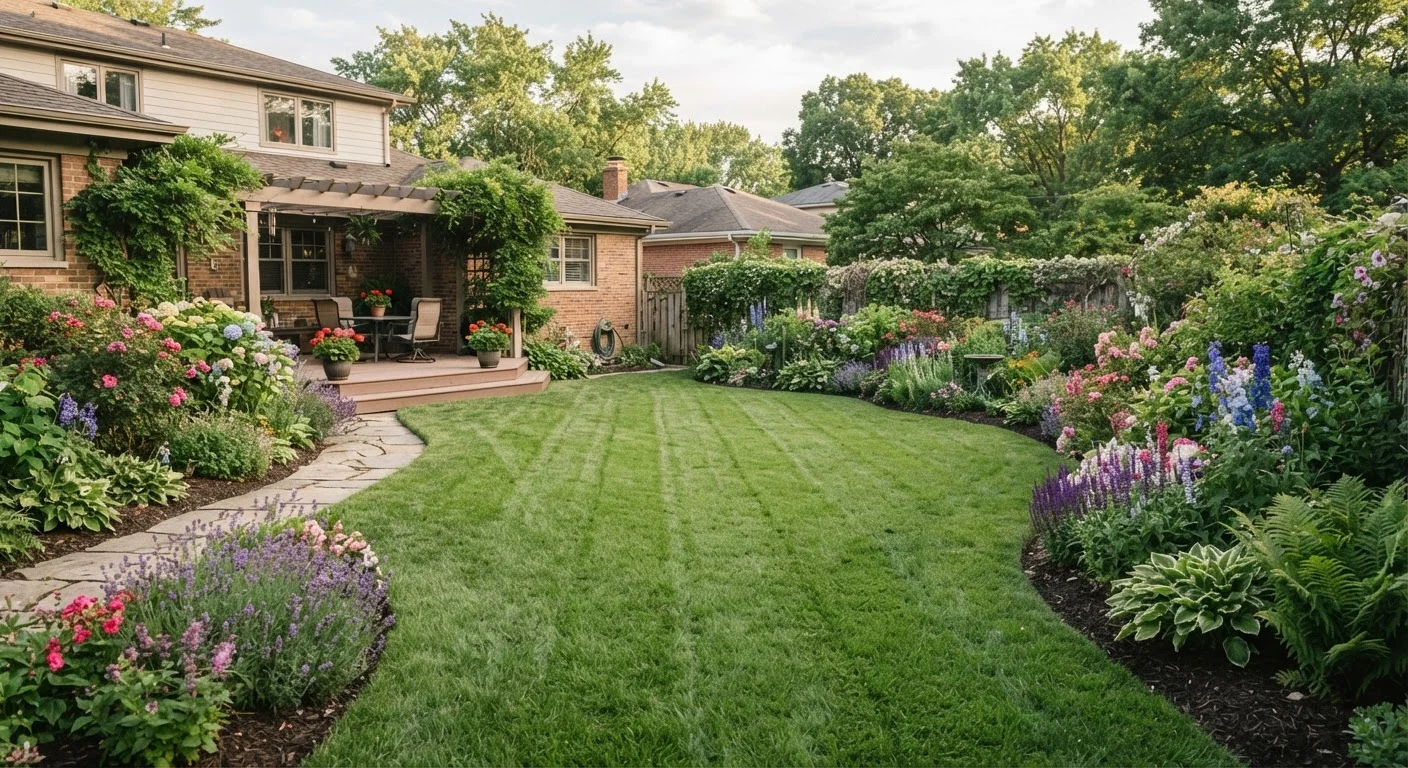
Photo: ResultsExplorer.com | Top Blogs For Everyone editorial
Key Takeaways
- Lawn grass offers usable outdoor space and proven cooling effects but demands consistent water, fertilizer, and mowing.
- Conventional turf care can contribute to water use and chemical runoff, with impact varying by region and practice.
- Alternatives like ground covers, native plantings, and hardscaping suit gardens where lower maintenance is a priority.
- The right choice depends on how you actually use your outdoor space and what your local climate demands.
- A hybrid approach - some lawn, some planted beds - often balances practicality with environmental considerations.
Provides a durable surface for outdoor recreation
Turfgrass handles foot traffic, play, and gatherings better than most alternatives. It recovers from moderate wear with good seasonal care.
Reduces soil erosion on sloped or bare ground
Dense root systems bind soil and slow water runoff, which is especially valuable on yards with grade changes or exposed areas.
Helps moderate heat around the home
Grass cools itself and surrounding surfaces through transpiration, which can reduce the heat island effect compared to paving or bare soil.
Creates visual structure and contrast in the garden
Open lawn panels provide a visual foil for planted borders and specimen plants, making a garden feel designed rather than cluttered.
Familiar and widely understood to maintain
Generations of homeowners have developed practical knowledge of lawn care; support, tools, and advice are widely accessible in most U.S. communities.
High water demand, especially in dry climates
Many turf species need regular irrigation to stay green through summer. In drought-prone regions, this can strain water budgets and conflict with local use restrictions.
Requires consistent time investment for upkeep
Mowing, edging, fertilizing, and seasonal treatments add up to a significant ongoing commitment that many homeowners underestimate at planting time.
Conventional care often involves chemical inputs
Synthetic fertilizers and pesticides are common in lawn maintenance programs. Misapplication can lead to runoff that affects nearby soil, water features, and plant life.
Provides limited habitat for pollinators and wildlife
A uniform, closely mowed lawn offers little for bees, butterflies, or other beneficial insects compared to diverse native plantings or mixed ground covers.
Can be poorly suited to challenging site conditions
Deep shade, compacted soil, steep slopes, and heavy clay all make establishing and maintaining a healthy lawn difficult, often leading to patchy or thin results.
What Lawn Grass Actually Offers
Turfgrass covers an enormous portion of American residential landscapes, and there are real reasons for that. A well-kept lawn creates a durable, level surface for outdoor activities - something that mulched beds, ground covers, or hardscaping can't always replicate in the same way. If you have children or pets who need room to run, grass remains one of the most practical and forgiving surfaces available.
Beyond function, grass has measurable environmental benefits that often get overlooked in the debate. Dense turf holds soil in place, reducing erosion on sloped yards. It also dissipates heat through transpiration, which can help moderate temperatures around the home during summer - a meaningful consideration in climates where urban heat is a concern.
Provides a durable surface for outdoor recreation
Turfgrass handles foot traffic, play, and gatherings better than most alternatives. It recovers from moderate wear with good seasonal care.
Reduces soil erosion on sloped or bare ground
Dense root systems bind soil and slow water runoff, which is especially valuable on yards with grade changes or exposed areas.
Helps moderate heat around the home
Grass cools itself and surrounding surfaces through transpiration, which can reduce the heat island effect compared to paving or bare soil.
Creates visual structure and contrast in the garden
Open lawn panels provide a visual foil for planted borders and specimen plants, making a garden feel designed rather than cluttered.
Familiar and widely understood to maintain
Generations of homeowners have developed practical knowledge of lawn care; support, tools, and advice are widely accessible in most U.S. communities.
Aesthetically, uniform lawn areas provide visual breathing room in a garden, offering contrast that makes planted borders and feature beds stand out. That clean, open look is what many homeowners have in mind when they picture a welcoming yard. For those thinking about how a garden functions across seasons, our guide to designing an outdoor space you'll actually use year-round explores how to plan around real-life use patterns.
The Real Costs of Keeping Grass
The trade-offs start to add up once you account for what a conventional lawn actually needs. Most turfgrass species require regular mowing, consistent irrigation through dry spells, seasonal fertilizing, and periodic weed and pest management. That's a substantial time and resource commitment that surprises many first-time homeowners.
High water demand, especially in dry climates
Many turf species need regular irrigation to stay green through summer. In drought-prone regions, this can strain water budgets and conflict with local use restrictions.
Requires consistent time investment for upkeep
Mowing, edging, fertilizing, and seasonal treatments add up to a significant ongoing commitment that many homeowners underestimate at planting time.
Conventional care often involves chemical inputs
Synthetic fertilizers and pesticides are common in lawn maintenance programs. Misapplication can lead to runoff that affects nearby soil, water features, and plant life.
Provides limited habitat for pollinators and wildlife
A uniform, closely mowed lawn offers little for bees, butterflies, or other beneficial insects compared to diverse native plantings or mixed ground covers.
Can be poorly suited to challenging site conditions
Deep shade, compacted soil, steep slopes, and heavy clay all make establishing and maintaining a healthy lawn difficult, often leading to patchy or thin results.
Water use is one of the most cited concerns. Lawns are among the largest consumers of residential irrigation water in many U.S. regions, and in drought-prone areas, that demand can conflict with local restrictions. Pesticide and synthetic fertilizer applications also carry runoff risk, particularly on sloped lots or yards close to water features. Managing pests without defaulting to chemicals is possible - our article on natural pest control strategies covers approaches with a reasonable track record in home gardens.
There's also the biodiversity question. A monoculture lawn provides limited habitat and food for pollinators compared with flowering perennials, native grasses, or mixed plantings. Lawns that are kept extremely tidy - short, uniform, with few flowering weeds - offer very little to bees and other beneficial insects.
~30%
Share of residential water use attributed to lawn irrigation
According to the U.S. Environmental Protection Agency, landscape irrigation accounts for roughly 30% of household water use nationally, with outdoor lawns as a primary driver.
40M+ acres
Estimated U.S. land area covered by turfgrass
Research published by NASA scientists estimated that turf covers more land area in the contiguous U.S. than any other irrigated crop, underscoring the scale of its resource demands.
Alternatives Worth Considering
If your yard doesn't see much foot traffic, or if water conservation is a priority in your area, reducing the lawn footprint is a practical step many gardeners find rewarding. Ground covers like creeping thyme, clover, or native sedges can fill open areas with less irrigation and no mowing. Mulched planting beds - see our reference on mulch types, purposes, and when to use each - suppress weeds and retain moisture while supporting a wider range of plants.
Hardscaping elements such as gravel paths, patios, or pavers remove maintenance demands entirely in high-traffic zones. Native perennial plantings can replace lawn sections with color and seasonal interest while supporting local pollinators. For a broader look at these strategies, our overview of low-maintenance landscaping approaches is a useful companion to this article.
Clover and Native Grasses as Lawn Alternatives
Mixing approaches - keeping a central lawn panel for use while replacing the perimeter with planted beds - often strikes the best balance. This hybrid model reduces overall inputs without eliminating the functional benefits of grass where they matter most.
Making the Decision for Your Yard
The honest answer is that lawn grass is neither inherently good nor bad for a home garden - it depends almost entirely on context. Climate, soil, local water availability, how you use your outdoor space, and how much time you're willing to invest all shape whether turf is a sensible choice or an unnecessary burden.
A household in the Pacific Northwest with moderate rainfall and children who play outside regularly will have a very different calculation than a household in a hot, arid climate where irrigation is expensive and outdoor entertaining happens mainly on a patio. Neither situation is wrong; they simply call for different solutions.
If you're rethinking your whole garden layout, exploring both planting strategies and structural design before committing to a turf plan can save rework later. Our guide to planning a garden that balances perennials and annuals offers a useful framework for thinking about the longer-term structure of planted areas alongside - or instead of - grass.
The content provided on our blog site traverses numerous categories, offering readers valuable and practical information. Readers can use the editorial team’s research and data to gain more insights into their topics of interest. However, they are requested not to treat the articles as conclusive. The website team cannot be held responsible for differences in data or inaccuracies found across other platforms. Please also note that the site might also miss out on various schemes and offers available that the readers may find more beneficial than the ones we cover.