
Garden Watering Methods Compared: Drip, Sprinkler, and Hand Watering

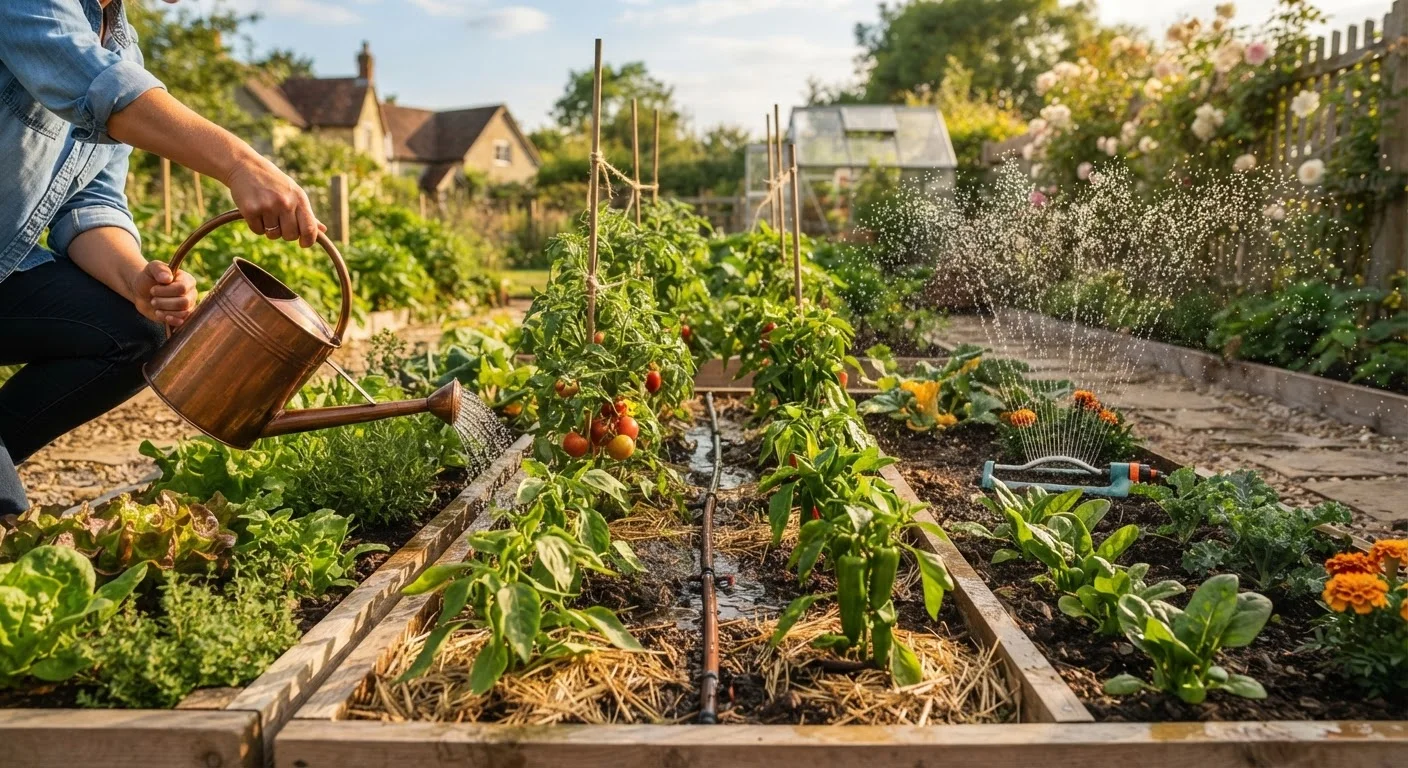
Photo: ResultsExplorer.com | Top Blogs For Everyone editorial
Key Takeaways
- Drip irrigation delivers water directly to roots, reducing waste and discouraging foliar disease.
- Sprinkler systems suit lawns and large areas but can lose significant water to evaporation.
- Hand watering offers the most control and lowest upfront cost, but demands consistent time.
- Your garden size, plant types, and local climate should guide which method you choose.
- Pairing any watering method with mulch can meaningfully reduce overall water needs.
How Each Watering Method Works
Understanding the mechanics of each approach helps you match the method to your garden's actual needs.
Drip irrigation uses a network of flexible tubes and emitters placed at soil level to deliver water slowly and directly to the root zone of each plant. Because water goes straight to the ground rather than into the air, very little is lost to evaporation or wind drift. Systems can be connected to a timer for fully automated watering.
Sprinkler systems spray water through the air over a wide area, mimicking rainfall. They range from simple oscillating or impulse sprinklers attached to a hose, to in-ground systems with multiple zones controlled by an irrigation controller. Sprinklers cover ground quickly and work well where uniform coverage across large areas is the goal.
Hand watering - using a watering can or handheld hose nozzle - is the oldest and simplest method. The gardener carries or directs water individually to each plant. It requires no installation and no equipment beyond a basic hose or can, making it accessible to anyone with a water source.
If you're starting fresh, see our guide to starting a vegetable garden from nothing for advice on setting up your beds before installing any watering system.
Efficiency, Water Use, and Plant Health
Water efficiency is increasingly important - both for the environment and for household utility bills.
Drip irrigation is generally considered the most efficient delivery method. By keeping water at root level, it minimises surface evaporation and avoids wetting foliage, which helps reduce the risk of fungal disease on crops like tomatoes and squash. Slow delivery also allows water to penetrate deeply, encouraging roots to grow downward rather than staying shallow.
Sprinklers lose a meaningful portion of water to evaporation, particularly when run during hot or windy periods. Watering during early morning hours reduces this loss considerably. Overhead watering also wets leaves, which can promote some fungal conditions in susceptible plants, though for lawns this is rarely a concern. If you're weighing lawn grass as part of your overall garden plan, our article on the case for and against lawn grass covers the broader considerations.
Hand watering sits somewhere in between. A careful gardener can direct water precisely to the base of plants, avoiding foliar wetting, but it is easy to under- or over-water when relying on visual judgment alone. Consistency tends to be harder to maintain over busy weeks.
Up to 50%
Water savings with drip vs. sprinkler
The EPA's WaterSense programme estimates that drip irrigation can use up to 50% less water than conventional sprinkler systems in many landscape applications.
~50%
Outdoor water use in a typical US home
According to the EPA, roughly half of household water use in the United States goes toward landscape and outdoor irrigation.
Regardless of method, pairing your watering routine with mulch significantly reduces moisture loss from the soil surface. Our guide to mulch types and purposes explains which materials work best in different settings.
Cost, Setup, and Ongoing Effort
Each method has a different upfront investment and ongoing time commitment.
| Drip Irrigation | Sprinkler System | Hand Watering | |
|---|---|---|---|
| Upfront cost | Moderate to high | Low to high (varies widely) | Very low |
| Installation effort | Moderate - planning required | Low (portable) to high (in-ground) | None |
| Water efficiency | High - minimal evaporation | Moderate - evaporation risk | Variable - depends on technique |
| Daily time demand | Low once automated | Low once programmed | High - manual each session |
| Best garden type | Vegetable beds, borders | Lawns, large open areas | Containers, small plots |
| Foliar disease risk | Low - root-level delivery | Higher - wets leaves | Low if aimed at base |
| Scalability | Good for established areas | Good for large coverage | Limited to small areas |
Drip systems require the most planning and initial investment. You'll need to map emitter placement for each plant, connect tubing, and potentially add a timer and pressure regulator. However, once installed in a stable planting area - such as a raised bed or perennial border - they require minimal daily effort. For raised bed gardeners, our raised beds vs. in-ground planting comparison may help you finalise your setup before committing to irrigation.
Sprinkler systems vary widely in cost. A basic hose-end sprinkler is inexpensive; a multi-zone in-ground system with an irrigation controller represents a significant investment, and professional installation is often advisable for in-ground work. Running costs depend on local water rates and how the system is programmed.
Hand watering has essentially no setup cost, but it trades money for time. For small gardens or container-heavy spaces, this trade-off is often worthwhile. For larger plots, the daily time commitment can become impractical, particularly during dry summer stretches.
Gardeners interested in reducing overall maintenance may also want to explore low-maintenance landscaping approaches that reduce how much supplemental watering a garden needs in the first place.
Choosing the Right Method for Your Garden
The best watering approach depends on your garden's size, plant mix, local climate, and how much time you can realistically commit.
- Vegetable and herb beds: Drip irrigation is widely regarded as a strong fit - it keeps water off edible leaves, delivers moisture consistently, and can be automated during busy periods.
- Lawns: Sprinklers - whether portable or in-ground - are the practical choice for uniform grass coverage. Programme them to run in the early morning to limit evaporation.
- Container plants and small patios: Hand watering with a watering can or adjustable nozzle lets you respond to each pot's individual needs, which varies considerably based on pot size, material, and sun exposure.
- Mixed perennial borders: A drip or soaker-hose system along established plantings reduces weeding as well as watering effort, since dry surface soil is less hospitable to weed germination.
- New seedlings and transplants: Gentle hand watering is often safest in the early weeks, as drip emitters may not be positioned precisely enough and sprinklers can disturb fragile stems.
Many gardeners find that using more than one method across different zones - drip for the vegetable patch, sprinklers for lawn areas, and hand watering for containers - produces the best overall results. If you're designing your outdoor space from the ground up, our article on designing an outdoor space you'll actually use year-round can help you plan irrigation zones alongside planting and hardscaping decisions.
The content provided on our blog site traverses numerous categories, offering readers valuable and practical information. Readers can use the editorial team’s research and data to gain more insights into their topics of interest. However, they are requested not to treat the articles as conclusive. The website team cannot be held responsible for differences in data or inaccuracies found across other platforms. Please also note that the site might also miss out on various schemes and offers available that the readers may find more beneficial than the ones we cover.